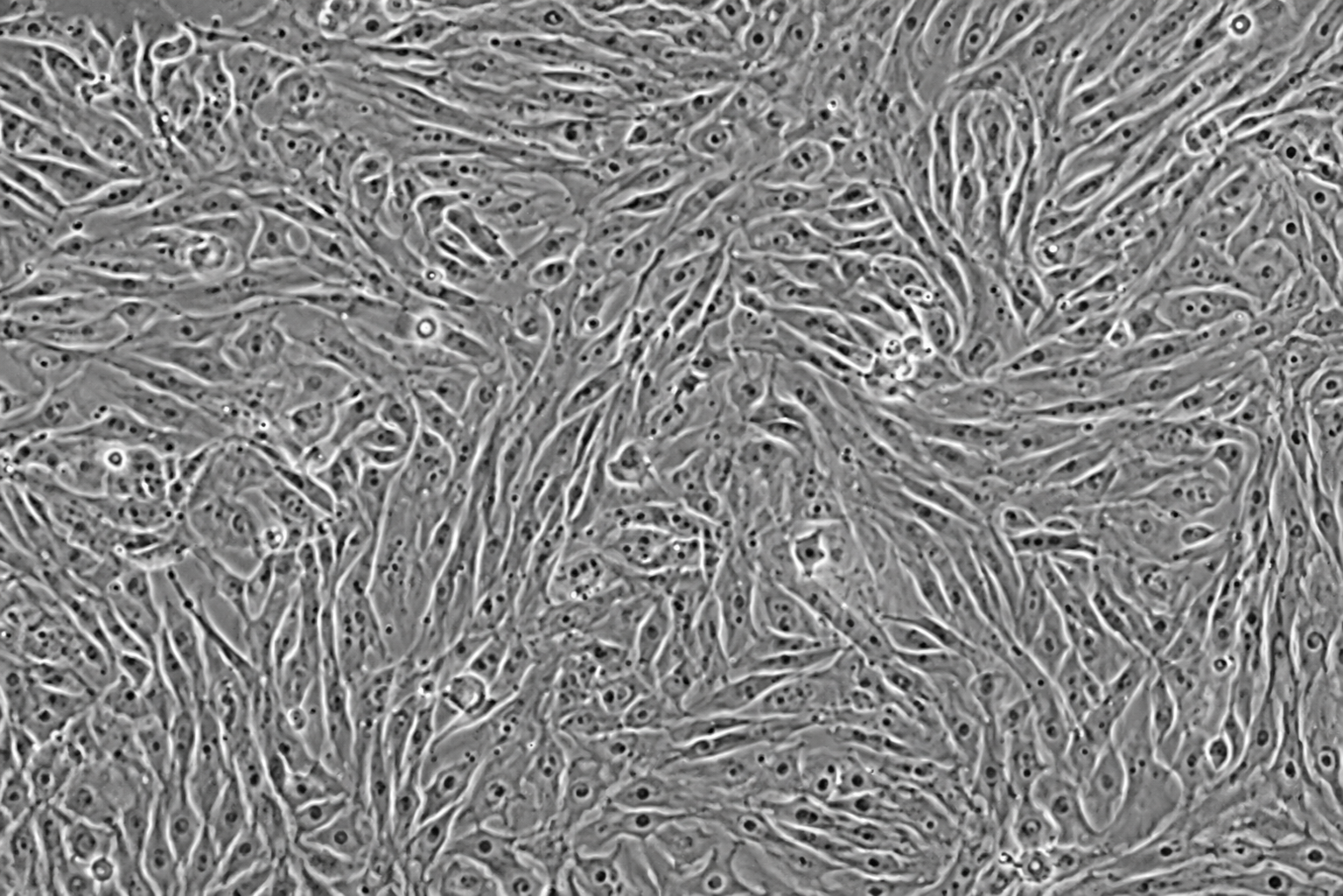
Human Liver Sinusoidal Microvascular Endothelial Cells Expressing AEQ-GFP in Mitochondria

Quick Actions
Product Overview
Description
Human Liver Sinusoidal Microvascular Endothelial Cells (HLSMECs) expressing Aequorin-Green Fluorescent Protein (AEQ-GFP) are a specialized in vitro cell model derived from the liver’s sinusoidal endothelium. These cells have been genetically engineered to specifically target the AEQ-GFP fusion protein to the mitochondria. This modification allows for real-time, live-cell imaging and functional studies of mitochondrial dynamics and calcium signaling within hepatic microvascular endothelial cells.
IMPORTANT: Quality warranty requires use of NeoBioPharma media. Biohazardous material despite negative pathogen testing. Quality claims must be reported within 1 month.
Key Features
Catalog Number: NBP-00112AEQ-GFP-Mito
Product Format: Frozen
Vial Cell Number: > 5x10[5] cells/vial
Passage:1(P1)
Storage: Liquid Nitrogen, Vapor Phase
Intended Use: Research use only (RUO)
CELLS CHARACTERIZATION
-Fluorescence: Bright green fluorescence enables visualization of mitochondrial structure and function.
-Functionality: Maintains key endothelial markers and properties, with preserved mitochondrial and calcium signaling pathways.
-Quality Control: Tested for mycoplasma, sterility, and functional AEQ-GFP expression
Quick Facts
Product Type
Engineered Human Endothelial Cells
Viability
>98% viable (Trypan Blue exclusion)
Applications
-Mitochondrial Calcium Imaging: Real-time monitor…
Availability
In Stock • Global Shipping
Technical Specifications
Primary Applications
Applications & Use Cases
Primary Applications
-Mitochondrial Calcium Imaging: Real-time monitoring of mitochondrial calcium flux in response to physiological or pharmacological stimuli. -Drug Screening: Assessment of drug effects on mitochondrial function and endothelial cell viability. -Toxicology: Evaluation of hepatotoxic compounds on mitochondrial health and endothelial response. -Mitochondrial Dynamics Research: Study of mitochondrial morphology
Suitable for -mitochondrial calcium imaging: real-time monitoring of mitochondrial calcium flux in response to physiological or pharmacological stimuli. -drug screening: assessment of drug effects on mitochondrial function and endothelial cell viability. -toxicology: evaluation of hepatotoxic compounds on mitochondrial health and endothelial response. -mitochondrial dynamics research: study of mitochondrial morphology studies and research applications
motility
Suitable for motility studies and research applications
and fission/fusion events in liver endothelial cells. -Pathophysiology Modeling: Investigation of liver diseases involving endothelial dysfunction or mitochondrial impairment (e.g.
Suitable for and fission/fusion events in liver endothelial cells. -pathophysiology modeling: investigation of liver diseases involving endothelial dysfunction or mitochondrial impairment (e.g. studies and research applications
NAFLD
Suitable for nafld studies and research applications
fibrosis). Cell Signaling Studies: Analysis of endothelial calcium signaling and cross-talk with other hepatic cell types.
Suitable for fibrosis). cell signaling studies: analysis of endothelial calcium signaling and cross-talk with other hepatic cell types. studies and research applications
Research Areas
In Vitro Studies
Cell culture and screening applications
Molecular Biology
Gene expression & signaling studies
Drug Discovery
Screening & validation studies
Disease Modeling
Pathophysiology research
Support & Resources
Technical Support
Our experts are available for technical questions and protocol assistance.
Contact Support