Human Brain Microvascular Endothelial Cells GFP-VE-CAD

Quick Actions
Product Overview
Description
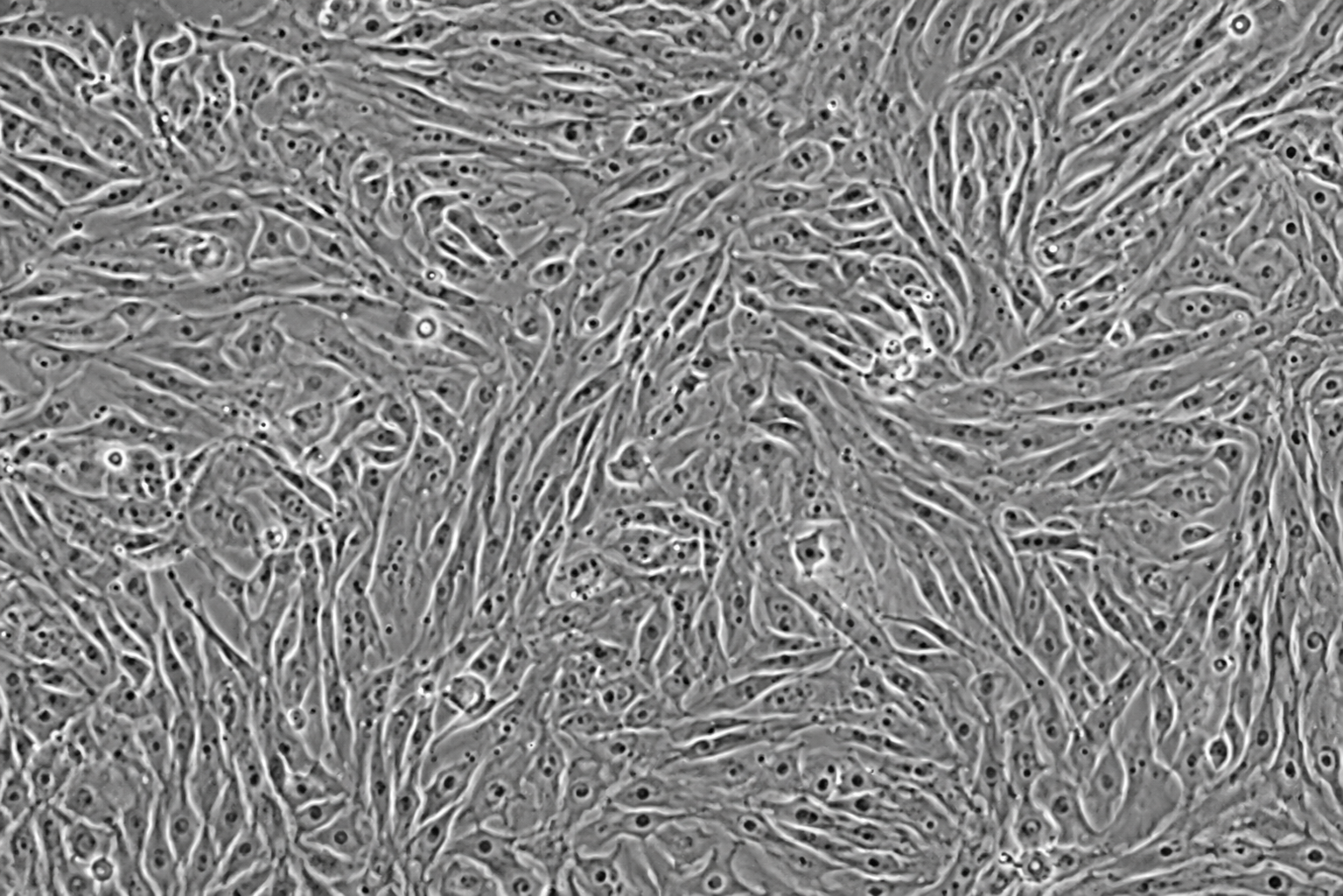
Human Brain Microvascular Endothelial Cells GFP-VE-CAD are human brain endothelial cells engineered to express green fluorescent protein (GFP)-tagged VE-Cadherin. VE-Cadherin is a key endothelial adhesion protein located at cell–cell junctions and is essential for maintaining vascular barrier integrity.
These cells are useful for studying blood-brain barrier biology, endothelial junction formation, vascular permeability, inflammation, drug transport, and endothelial cell behavior in real time using fluorescence microscopy.
IMPORTANT: Quality warranty requires use of NeoBioPharma media. Biohazardous material despite negative pathogen testing. Quality claims must be reported within 1 month.
Key Features
Catalog Number: NBP-301-GFP-VE-CAD
Product Format: Frozen
Vial Cell Number: > 5x10[5] cells/vial
Passage:1(P1)
Storage: Liquid Nitrogen, Vapor Phase
Intended Use: Research use only (RUO)
Characteristics
-Cell Type Human Brain Microvascular Endothelial Cells
-Marker Expression VE-Cadherin, CD31/PECAM-1, von
-Willebrand Factor, Claudin-5, ZO-1
-Reporter GFP-tagged VE-Cadherin
-Fluorescence Green fluorescence localized mainly at endothelial cell junctions
-Morphology Cobblestone-like endothelial morphology when confluent
-Growth Pattern Adherent monolayer culture
Quick Facts
Product Type
Engineered Human Endothelial Cells
Viability
>95% viable (Trypan Blue exclusion)
Applications
-Blood-Brain Barrier Studies Used to model the e…
Availability
In Stock • Global Shipping
Technical Specifications
Primary Applications
Applications & Use Cases
Primary Applications
-Blood-Brain Barrier Studies Used to model the endothelial layer of the human blood-brain barrier and study barrier integrity. -VE-Cadherin Junction Imaging GFP-VE-Cadherin allows real-time visualization of endothelial cell–cell junctions. -Drug Permeability Assays Suitable for testing drug transport
Suitable for -blood-brain barrier studies used to model the endothelial layer of the human blood-brain barrier and study barrier integrity. -ve-cadherin junction imaging gfp-ve-cadherin allows real-time visualization of endothelial cell–cell junctions. -drug permeability assays suitable for testing drug transport studies and research applications
compound permeability
Suitable for compound permeability studies and research applications
and barrier disruption. -Neuroinflammation Research Useful for studying cytokine effects
Suitable for and barrier disruption. -neuroinflammation research useful for studying cytokine effects studies and research applications
immune-cell interaction
Suitable for immune-cell interaction studies and research applications
and endothelial activation. -Angiogenesis and Vascular Biology Can be used in tube formation
Suitable for and endothelial activation. -angiogenesis and vascular biology can be used in tube formation studies and research applications
migration
Suitable for migration studies and research applications
and endothelial remodeling assays. -Toxicity Screening Useful for evaluating drug
Suitable for and endothelial remodeling assays. -toxicity screening useful for evaluating drug studies and research applications
nanoparticle
Suitable for nanoparticle studies and research applications
or chemical toxicity on human brain endothelial cells. -Co-Culture BBB Models Can be co-cultured with astrocytes
Suitable for or chemical toxicity on human brain endothelial cells. -co-culture bbb models can be co-cultured with astrocytes studies and research applications
pericytes
Suitable for pericytes studies and research applications
neurons
Suitable for neurons studies and research applications
or microglia to create more advanced BBB models.
Suitable for or microglia to create more advanced bbb models. studies and research applications
Research Areas
In Vitro Studies
Cell culture and screening applications
Molecular Biology
Gene expression & signaling studies
Drug Discovery
Screening & validation studies
Disease Modeling
Pathophysiology research
Support & Resources
Technical Support
Our experts are available for technical questions and protocol assistance.
Contact Support