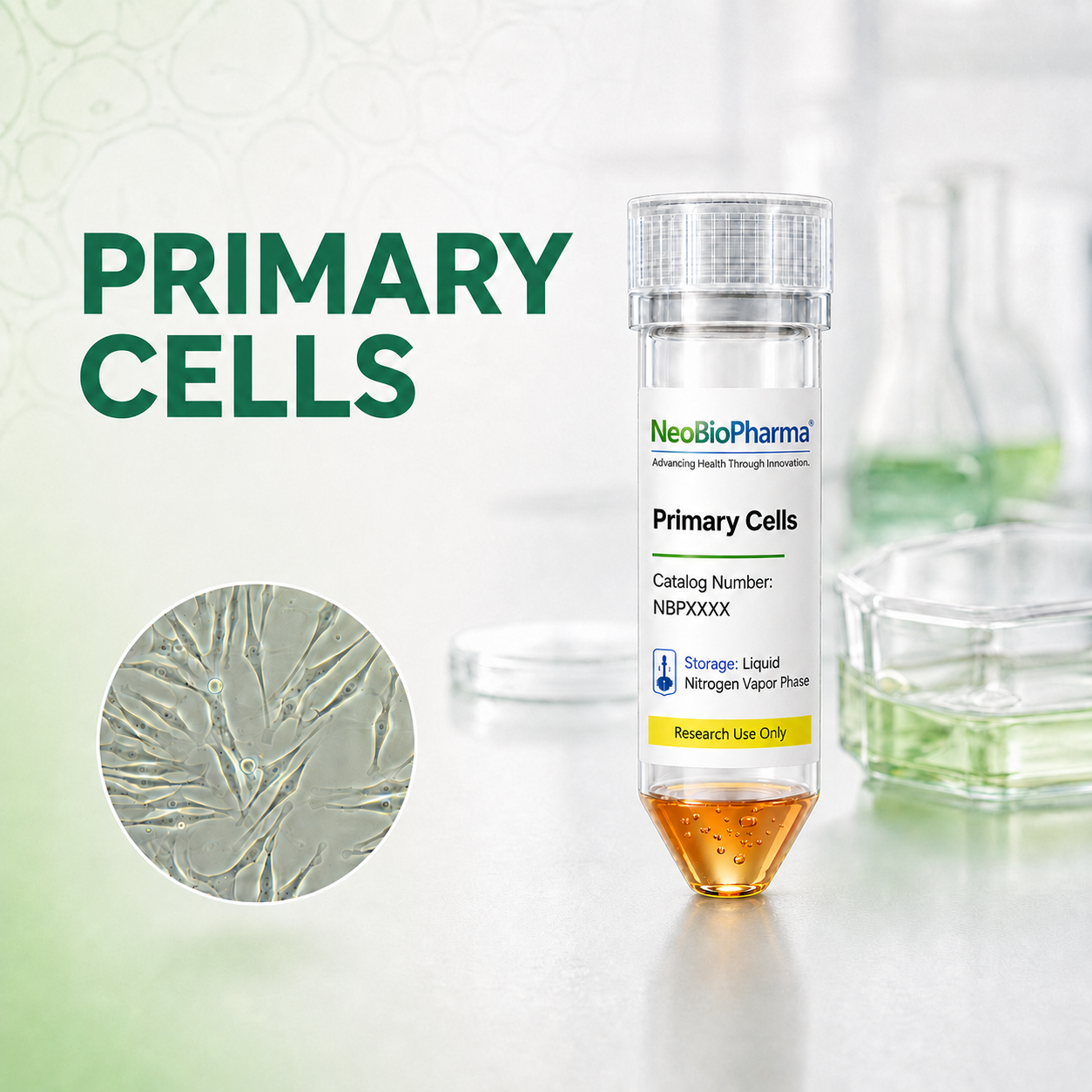
GFP-hTert Immortalized Human Retinal Microvascular Pericytes

Quick Actions
Product Overview
Description
GFP-Tagged Immortalized Human Retinal Microvascular Pericytes, developed from hTert-transformed human cells, are specialized cells that play a crucial role in the health of retinal blood vessels. These pericytes are essential for the maintenance of vascular stability, regulation of blood flow, and support of the endothelial cells that line the microvascular network in the retina.
By utilizing the Green Fluorescent Protein (GFP) tagging, researchers can easily visualize and study these cells, aiding in the understanding of their functions and interactions in retinal physiology and disease.
Key Features
Catalog Number: NBP-0022
Product Format: Frozen
Vial Cell Number: > 5x10[5] cells/vial
Passage:1(P1)
Storage: Liquid Nitrogen, Vapor Phase
Intended Use: Research use only (RUO)
Characteristics:
Species: Human
Cell Type: Retinal microvascular pericytes
Modification: hTERT immortalized
Reporter: GFP-expressing cells for fluorescence tracking
Morphology: Adherent cells resembling pericytes with cytoplasmic processes
Functional Relevance: Pericytes play a critical role in supporting retinal capillary stability, regulating angiogenesis, contributing to blood-retinal barrier function, and maintaining close interactions with endothelial cells.
Quick Facts
Product Type
Immortalized Endothelial
Viability
>98% viable (Trypan Blue exclusion)
Applications
-Retinal vascular biology Useful for studying pe…
Availability
In Stock • Global Shipping
Technical Specifications
Primary Applications
Applications & Use Cases
Primary Applications
-Retinal vascular biology Useful for studying pericyte behavior in retinal capillaries
Suitable for -retinal vascular biology useful for studying pericyte behavior in retinal capillaries studies and research applications
vascular stabilization
Suitable for vascular stabilization studies and research applications
endothelial-pericyte communication
Suitable for endothelial-pericyte communication studies and research applications
and retinal microvascular remodeling. -Blood-retinal barrier models Can be used in co-culture systems with human retinal microvascular endothelial cells to model the inner blood-retinal barrier and evaluate barrier integrity
Suitable for and retinal microvascular remodeling. -blood-retinal barrier models can be used in co-culture systems with human retinal microvascular endothelial cells to model the inner blood-retinal barrier and evaluate barrier integrity studies and research applications
permeability
Suitable for permeability studies and research applications
and vascular support mechanisms. -Diabetic retinopathy research Pericyte loss and dysfunction are important features of diabetic retinal microvascular disease
Suitable for and vascular support mechanisms. -diabetic retinopathy research pericyte loss and dysfunction are important features of diabetic retinal microvascular disease studies and research applications
making these cells useful for studying hyperglycemia-induced stress
Suitable for making these cells useful for studying hyperglycemia-induced stress studies and research applications
inflammation
Suitable for inflammation studies and research applications
vascular leakage
Suitable for vascular leakage studies and research applications
and protective compounds.
Suitable for and protective compounds. studies and research applications
Research Areas
In Vitro Studies
Cell culture and screening applications
Molecular Biology
Gene expression & signaling studies
Drug Discovery
Screening & validation studies
Disease Modeling
Pathophysiology research
Support & Resources
Technical Support
Our experts are available for technical questions and protocol assistance.
Contact Support