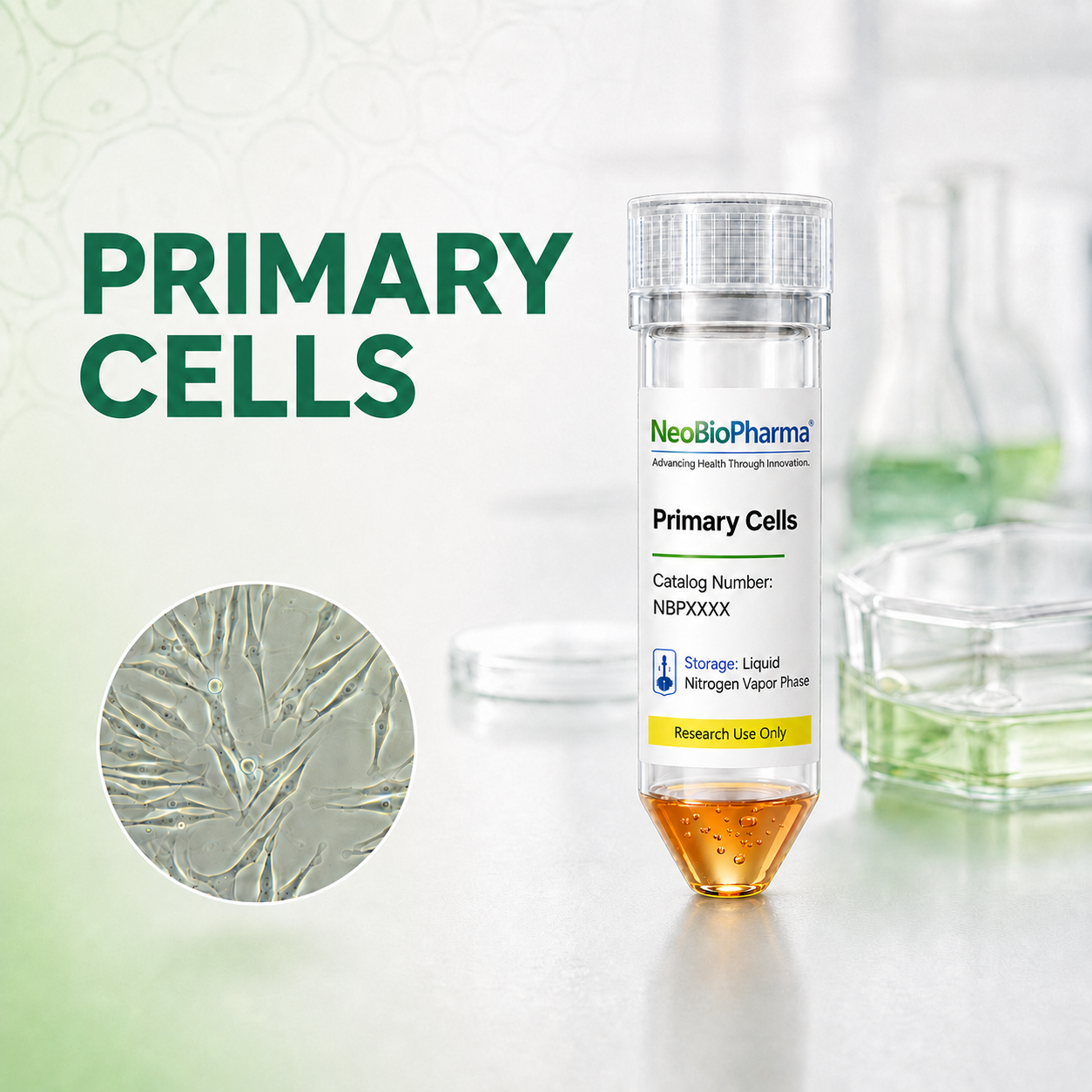
Human Bladder Microvascular Endothelial Cells

Quick Actions
Product Overview
Description
Human Bladder Microvascular Endothelial Cells (HBMEC) are highly specialized cells that form the inner lining of the microvasculature, consisting of tiny blood vessels such as capillaries, arterioles, and venules, within the human bladder. These endothelial cells are essential for maintaining the delicate balance of vascular tone, which influences blood flow and pressure.
They also regulate the permeability of the vessel walls, allowing for the selective exchange of nutrients and waste products between the bloodstream and bladder tissue. By performing these critical functions, HBMEC contribute significantly to the overall health and proper functioning of the bladder.
IMPORTANT: Quality warranty requires use of NeoBioPharma media. Biohazardous material despite negative pathogen testing. Quality claims must be reported within 1 month.
Key Features
Catalog Number: NBP-0022
Product Format: Frozen
Vial Cell Number: > 5x10[5] cells/vial
Passage:1(P1)
Storage: Liquid Nitrogen, Vapor Phase
Intended Use: Research use only (RUO)
CELLS CHARACTERIZATION
Morphology: Exhibit a classic cobblestone appearance under phase-contrast microscopy when confluent.
Markers: Express endothelial-specific markers such as CD31 (PECAM-1), VE-cadherin, von Willebrand factor (vWF), and uptake of acetylated-LDL.
Functionality: Maintain selective permeability, form tight junctions, and respond to angiogenic stimuli.
Growth Properties: Adherent, with robust proliferation in optimized endothelial cell culture media.
Origin: Isolated from human bladder tissue, ensuring organ-specific functionality.
Purity: High purity, typically >90% positive for endothelial markers.
Quick Facts
Product Type
Human Endothelial cells
Viability
>98% viable (Trypan Blue exclusion)
Applications
Angiogenesis Studies: Used to investigate mechani…
Availability
In Stock • Global Shipping
Technical Specifications
Primary Applications
Applications & Use Cases
Primary Applications
Angiogenesis Studies: Used to investigate mechanisms of blood vessel formation and remodeling in the bladder. Drug Screening: Serve as an in vitro model to assess the vascular toxicity or permeability of new pharmaceuticals targeting urinary tract diseases. Bladder Disease Modeling: Employed in research on bladder pathologies such as interstitial cystitis
Suitable for angiogenesis studies: used to investigate mechanisms of blood vessel formation and remodeling in the bladder. drug screening: serve as an in vitro model to assess the vascular toxicity or permeability of new pharmaceuticals targeting urinary tract diseases. bladder disease modeling: employed in research on bladder pathologies such as interstitial cystitis studies and research applications
bladder cancer
Suitable for bladder cancer studies and research applications
and inflammation. Tissue Engineering: Utilized in the development of engineered bladder tissues and regenerative medicine approaches. Physiological and Pathophysiological
Suitable for and inflammation. tissue engineering: utilized in the development of engineered bladder tissues and regenerative medicine approaches. physiological and pathophysiological studies and research applications
Research Areas
In Vitro Studies
Cell culture and screening applications
Molecular Biology
Gene expression & signaling studies
Drug Discovery
Screening & validation studies
Disease Modeling
Pathophysiology research
Support & Resources
Technical Support
Our experts are available for technical questions and protocol assistance.
Contact Support