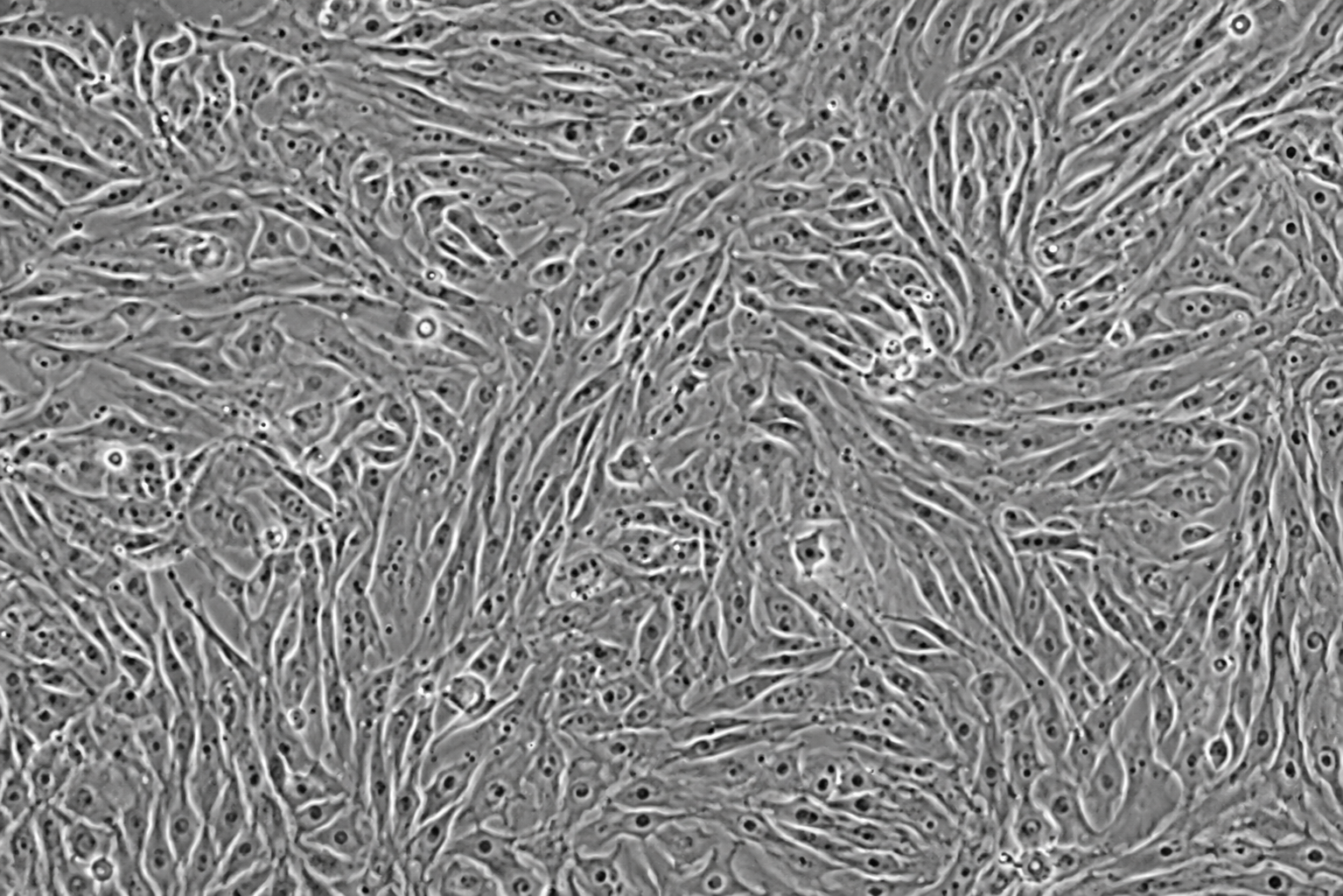
Human Umbilical Vein Endothelial Cells (HUVECs) Expressing VE-CAD-GFP

Quick Actions
Product Overview
Description
Human Umbilical Vein Endothelial Cells (HUVECs) expressing VE-CAD-GFP are primary endothelial cells derived from the human umbilical vein that have been genetically modified to express VE-cadherin (VE-CAD) fused to Green Fluorescent Protein (GFP).
VE-cadherin is a key adhesion molecule located at endothelial cell–cell junctions, essential for maintaining vascular integrity.
This fluorescent tagging allows real-time visualization of endothelial junction formation, barrier function, and vascular dynamics.
IMPORTANT: Quality warranty requires use of NeoBioPharma media. Biohazardous material despite negative pathogen testing. Quality claims must be reported within 1 month.
Key Features
Catalog Number: NBP-0001VECAD-GFP
Product Format: Frozen
Vial Cell Number: > 5x10[5] cells/vial
Passage:1(P1)
Storage: Liquid Nitrogen, Vapor Phase
Intended Use: Research use only (RUO)
Characteristics:
Cell type: Primary human endothelial cells (venous origin)
Marker: VE-cadherin (CD144) fused with GFP
Fluorescence pattern: Bright green signal outlining cell borders (cell–cell junctions)
Morphology:
Cobblestone-like monolayer when confluent
Tight intercellular junctions
Biological behavior:
Strong contact inhibition
Forms vascular-like networks in vitro under angiogenic conditions
Functional relevance: Models endothelial barrier integrity and vascular permeability
Quick Facts
Product Type
Engineered Human Endothelial Cells
Viability
>95% viable (Trypan Blue exclusion)
Applications
-Angiogenesis research (blood vessel formation st…
Availability
In Stock • Global Shipping
Technical Specifications
Primary Applications
Applications & Use Cases
Primary Applications
-Angiogenesis research (blood vessel formation studies) -Barrier function assays (vascular permeability
Suitable for -angiogenesis research (blood vessel formation studies) -barrier function assays (vascular permeability studies and research applications
tight junction integrity) -Drug screening (vascular-targeting compounds
Suitable for tight junction integrity) -drug screening (vascular-targeting compounds studies and research applications
anti-inflammatory agents) -Live-cell imaging of junction dynamics -Inflammation and leukocyte transmigration studies -Cancer microenvironment research (tumor vascular interaction models)
Suitable for anti-inflammatory agents) -live-cell imaging of junction dynamics -inflammation and leukocyte transmigration studies -cancer microenvironment research (tumor vascular interaction models) studies and research applications
Research Areas
In Vitro Studies
Cell culture and screening applications
Molecular Biology
Gene expression & signaling studies
Drug Discovery
Screening & validation studies
Disease Modeling
Pathophysiology research
Support & Resources
Technical Support
Our experts are available for technical questions and protocol assistance.
Contact Support