
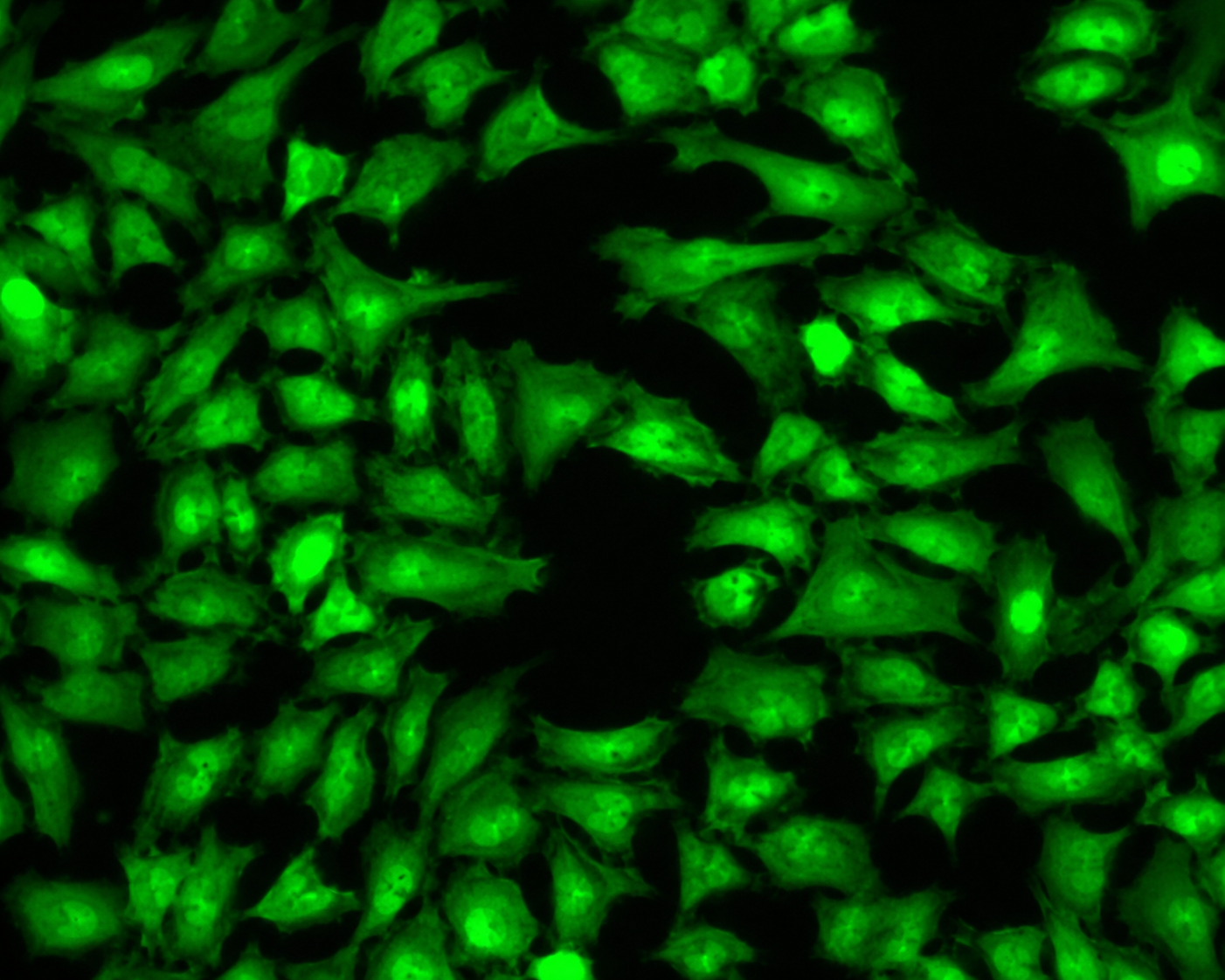
GFP-Human Liver Carcinoma Cells (Hep3B)
Quick Actions
Documentation 0 files
Product Overview
Description
GFP-labeled Human Liver Carcinoma cells (Hep3B) are specialized cancer cells that have been tagged with a green fluorescent protein, allowing for easy visualization under a microscope. These cells originate from the Hep3B/Hep 3B2.1-7 liver cancer cell line, which is well-known in research for studying liver cancers.
The parental Hep3B line showcases a distinct epithelial morphology, indicating its resemblance to normal liver tissue cells. It is derived from actual human liver carcinoma tissue, which underscores its relevance in cancer research. Notably, the Hep3B cells also carry an integrated genome from the hepatitis B virus, adding another layer of significance to their utility in exploring the relationship between liver cancer and viral infections.
IMPORTANT: Quality warranty requires use of NeoBioPharma media. Biohazardous material despite negative pathogen testing. Quality claims must be reported within 1 month.
Key Features
Catalog Number: NBP-0133GFP
Product Format: Frozen
Vial Cell Number: > 5x10[5] cells/vial
Storage: Liquid Nitrogen, Vapor Phase
Intended Use: Research use only (RUO)
Characteristics:
-Cell type: Human liver carcinoma / hepatocellular carcinoma cells
-Parental line: Hep3B / Hep 3B2.1-7
-Fluorescent marker: GFP-positive
-Morphology: Epithelial-like adherent cells
Quick Facts
Product Type
Tumor Cells
Viability
>95% viable (Trypan Blue exclusion)
Applications
-Liver cancer research -Hepatocellular carcinoma…
Availability
In Stock • Global Shipping
Technical Specifications
Primary Applications
Applications & Use Cases
Primary Applications
-Liver cancer research -Hepatocellular carcinoma tumor biology -Live-cell fluorescence imaging -Drug screening and cytotoxicity assays -Tumor growth and migration studies -3D spheroid and organoid-like cancer models
Suitable for -liver cancer research -hepatocellular carcinoma tumor biology -live-cell fluorescence imaging -drug screening and cytotoxicity assays -tumor growth and migration studies -3d spheroid and organoid-like cancer models studies and research applications
Research Areas
In Vitro Studies
Cell culture and screening applications
Molecular Biology
Gene expression & signaling studies
Drug Discovery
Screening & validation studies
Disease Modeling
Pathophysiology research
Support & Resources
Technical Support
Our experts are available for technical questions and protocol assistance.
Contact SupportDocumentation & Resources
No Documentation Available
Documentation for this product is not yet available.
Request Documentation