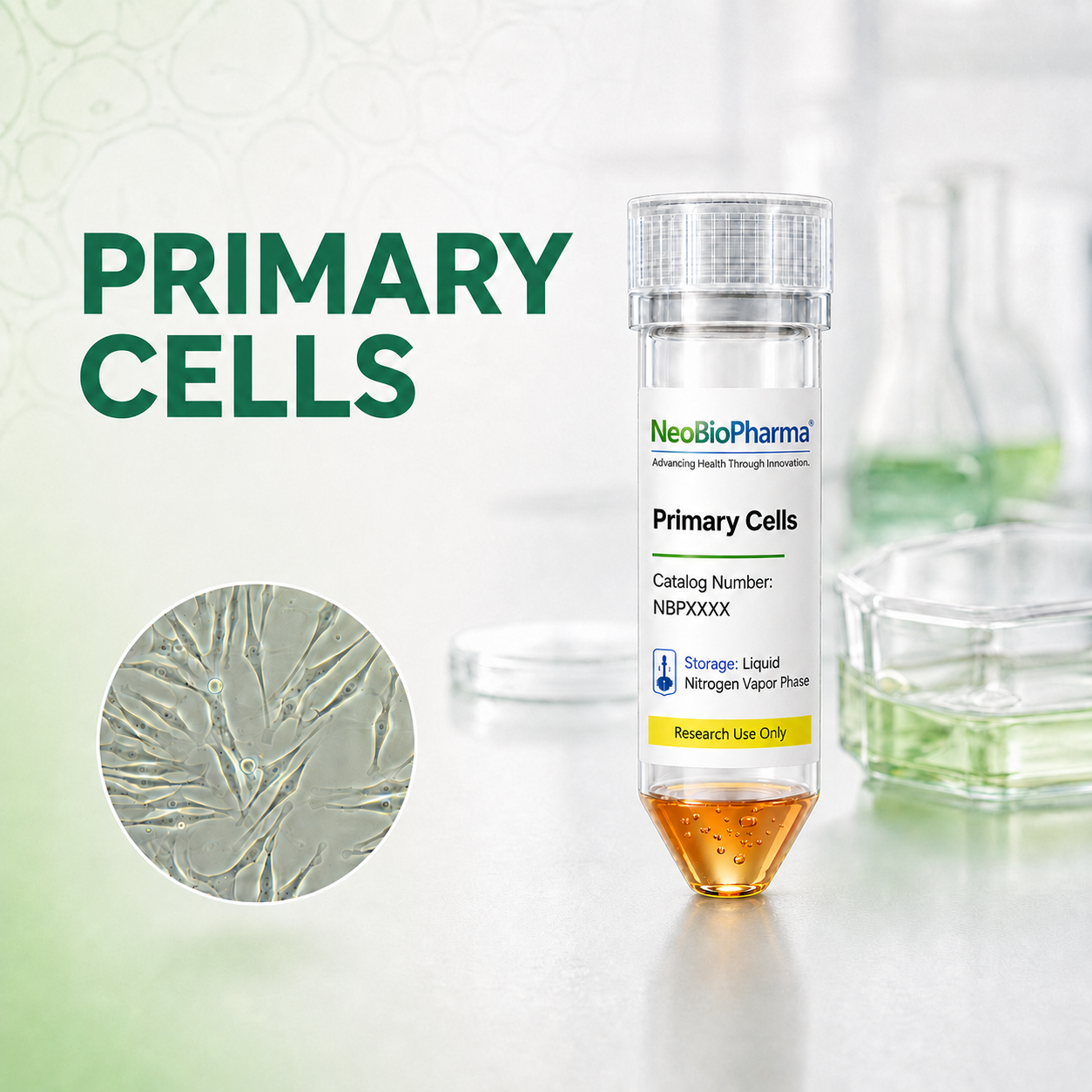
Human Diabetic Primary Pulmonary Artery Fibroblast Cells

Quick Actions
Product Overview
Description
Human Diabetic Primary Pulmonary Artery Fibroblast Cells are cryopreserved primary fibroblast cells intended for in vitro studies of diabetes-associated cellular dysfunction, tissue remodeling, signaling, and pharmacology. Early-passage use is recommended to reduce phenotype drift and preserve application-relevant behavior.
Guarantee expansion for a minimum of 2-6 population
doublings.
IMPORTANT: Quality warranty requires use of NeoBioPharma media. Biohazardous material despite negative pathogen testing. Quality claims must be reported within 1 month.
Key Features
Catalog Number: NBPDF015
Product Format: Frozen
Vial Cell Number: > 5x10[5] cells/vial
Passage:1(P1)
Storage: Liquid Nitrogen, Vapor Phase
Intended Use: Research use only (RUO)
Characterization Markers
- Characterized by spindle morphology under light microscopy.
- Negative for von Willebrand Factor (vWF) , Cytokeratin 18,
and alpha-smooth muscle actin .
- Isolated and characterized to ensure fibroblast purity
Quick Facts
Product Type
Human Type II Diabetes Endothelial Cells
Viability
>95% viable (Trypan Blue exclusion)
Applications
Research: - hDPPAFs are useful in studying the m…
Availability
In Stock • Global Shipping
Technical Specifications
Primary Applications
Applications & Use Cases
Primary Applications
Research: - hDPPAFs are useful in studying the mechanisms of pulmonary vascular disease in the context of diabetes. Therapeutics: - These cells can be utilized to test new therapeutic compounds aimed at reversing the effects of fibrosis and improving pulmonary vascular health. Modeling Disease: - They serve as valuable in vitro models for understanding diabetes-related vascular complications and screening potential drug candidates.
Suitable for research: - hdppafs are useful in studying the mechanisms of pulmonary vascular disease in the context of diabetes. therapeutics: - these cells can be utilized to test new therapeutic compounds aimed at reversing the effects of fibrosis and improving pulmonary vascular health. modeling disease: - they serve as valuable in vitro models for understanding diabetes-related vascular complications and screening potential drug candidates. studies and research applications
Research Areas
In Vitro Studies
Cell culture and screening applications
Molecular Biology
Gene expression & signaling studies
Drug Discovery
Screening & validation studies
Disease Modeling
Pathophysiology research
Support & Resources
Technical Support
Our experts are available for technical questions and protocol assistance.
Contact Support