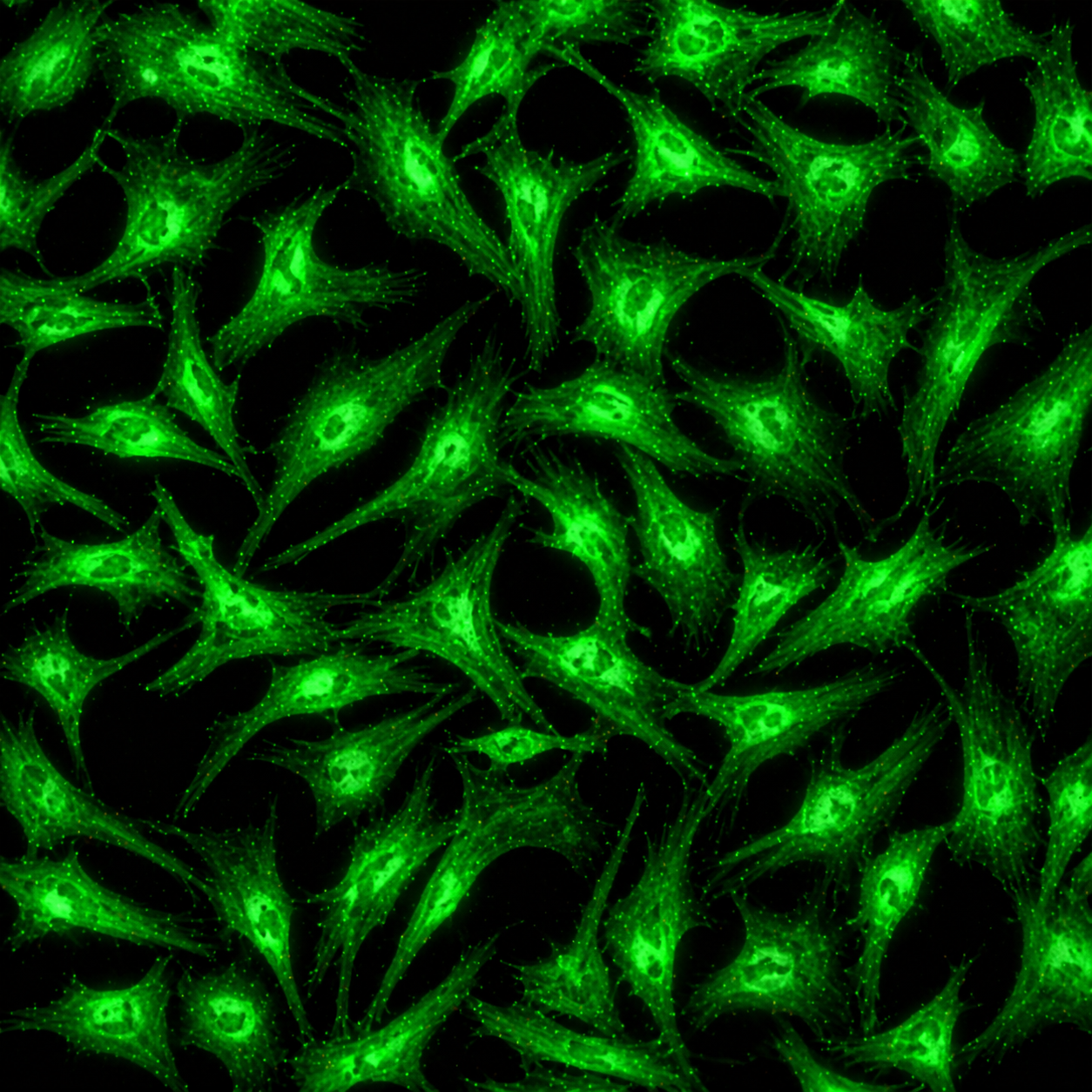
Human Liver Sinusoidal Microvascular Endothelial Cells

Quick Actions
Documentation 0 files
Product Overview
Description
Human Liver Sinusoidal Microvascular Endothelial Cells (HLSMECs) are unique and specialized cells found in the liver that serve essential functions. They line the sinusoids, which are small capillaries that facilitate blood flow within the liver. One of their key characteristics is their fenestrated structure, meaning they have small pores that allow for efficient exchange of substances, such as nutrients and waste products, between the blood and liver tissue. Unlike many other endothelial cells, HLSMECs do not have a basement membrane, which enhances their permeability and capability for exchange.
HLSMECs are vital for several physiological processes, including the maintenance of hepatic microcirculation, management of liver function, and involvement in immune responses. Their unique properties make them integral to the liver's ability to filter blood, regulate metabolism, and support overall bodily health. In summary, HLSMECs play an indispensable role in ensuring the liver operates effectively, facilitating important biochemical exchanges that impact the entire organism.
IMPORTANT: Quality warranty requires use of NeoBioPharma media. Biohazardous material despite negative pathogen testing. Quality claims must be reported within 1 month.
Key Features
Catalog Number: NBP-0012
Product Format: Frozen
Vial Cell Number: > 5x10[5] cells/vial
Passage:1(P1)
Storage: Liquid Nitrogen, Vapor Phase
Intended Use: Research use only (RUO)
CELLS CHARACTERIZATION
-Fenestrated Structure: Presence of transcellular pores (fenestrae) that facilitate rapid exchange of molecules.
Scavenger Function: Express scavenger receptors, allowing uptake and clearance of waste and macromolecules.
-Lack of Basement Membrane: Unlike other endothelial cells, HLSMECs have a discontinuous or absent basement membrane, promoting efficient substance exchange.
-Immunological Role: Involved in immune surveillance, antigen presentation, and hepatic tolerance.
-Expression of Specific Markers: Express markers such as CD31, CD34 (variably), LYVE-1, Stabilin-1 and -2, and Factor VIII-related antigen.
Quick Facts
Product Type
Human Endothelial cells
Viability
>98% viable (Trypan Blue exclusion)
Applications
-Liver Disease Research: Modeling liver fibrosis,…
Availability
In Stock • Global Shipping
Technical Specifications
Primary Applications
Applications & Use Cases
Primary Applications
-Liver Disease Research: Modeling liver fibrosis
Suitable for -liver disease research: modeling liver fibrosis studies and research applications
cirrhosis
Suitable for cirrhosis studies and research applications
non-alcoholic fatty liver disease
Suitable for non-alcoholic fatty liver disease studies and research applications
and hepatocellular carcinoma. -Drug Metabolism and Toxicity Testing: Studying hepatic drug uptake
Suitable for and hepatocellular carcinoma. -drug metabolism and toxicity testing: studying hepatic drug uptake studies and research applications
metabolism
Suitable for metabolism studies and research applications
and toxicity
Suitable for and toxicity studies and research applications
especially for compounds cleared via the sinusoidal endothelium. -Regenerative Medicine: Development of bioartificial liver devices and tissue engineering. -Viral Infection Studies: Research on hepatitis viruses and other pathogens that interact with liver sinusoidal endothelium. -Immunological Studies: Investigation of liver-specific immune responses and tolerance mechanisms. -Angiogenesis Research: Studying mechanisms of liver vascularization and angiogenesis in health and disease.
Suitable for especially for compounds cleared via the sinusoidal endothelium. -regenerative medicine: development of bioartificial liver devices and tissue engineering. -viral infection studies: research on hepatitis viruses and other pathogens that interact with liver sinusoidal endothelium. -immunological studies: investigation of liver-specific immune responses and tolerance mechanisms. -angiogenesis research: studying mechanisms of liver vascularization and angiogenesis in health and disease. studies and research applications
Research Areas
In Vitro Studies
Cell culture and screening applications
Molecular Biology
Gene expression & signaling studies
Drug Discovery
Screening & validation studies
Disease Modeling
Pathophysiology research
Support & Resources
Technical Support
Our experts are available for technical questions and protocol assistance.
Contact SupportDocumentation & Resources
No Documentation Available
Documentation for this product is not yet available.
Request Documentation