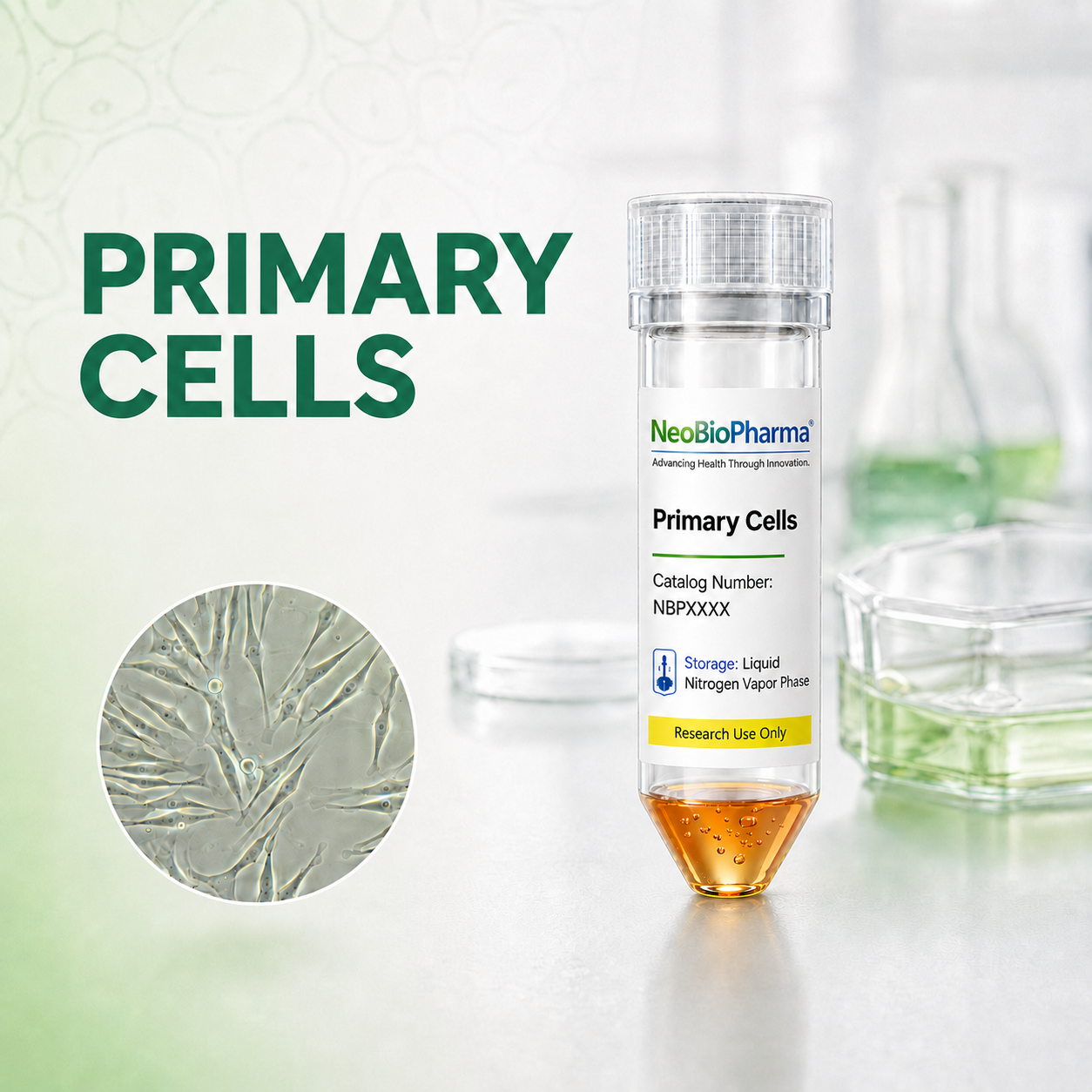
Human Primary Diabetic Pulmonary Artery Endothelial Cells

Quick Actions
Product Overview
Description
Human Primary Diabetic Pulmonary Artery Endothelial Cells (DPAEC) are isolated from the pulmonary artery associated with Type 2 Diabetes Mellitus. These cells exhibit arterial endothelial characteristics with diabetic dysfunction, suitable for studying diabetic pulmonary arterial hypertension, vascular remodeling, and endothelial dysfunction.
Guarantee expansion for a minimum of 2-5 population
doublings.
IMPORTANT: Quality warranty requires use of NeoBioPharma media. Biohazardous material despite negative pathogen testing. Quality claims must be reported within 1 month.
Key Features
Catalog Number: NBPD015
Product Format: Frozen
Vial Cell Number: > 5x10[5] cells/vial
Passage:1(P1)
Storage: Liquid Nitrogen, Vapor Phase
Intended Use: Research use only (RUO)
Characterization. Markers
Positive for endothelial markers: Positive for endothelial cell
markers: CD31 (PECAM-1) and VE-Cadherin by
immunofluorescence staining or FACS .
Quick Facts
Product Type
Human Type II Diabetes Endothelial Cells
Viability
>95% viable (Trypan Blue exclusion)
Applications
-Diabetic Vasculopathy: Studying how high blood s…
Availability
In Stock • Global Shipping
Technical Specifications
Primary Applications
Applications & Use Cases
Primary Applications
-Diabetic Vasculopathy: Studying how high blood sugar damages the pulmonary vessels. -Pulmonary Hypertension (PH): Diabetes is a risk factor for Pulmonary Arterial Hypertension. Researchers use these cells to see how insulin resistance alters vascular remodeling in the lungs. -Atherosclerosis Models: Although atherosclerosis typically affects arteries
Suitable for -diabetic vasculopathy: studying how high blood sugar damages the pulmonary vessels. -pulmonary hypertension (ph): diabetes is a risk factor for pulmonary arterial hypertension. researchers use these cells to see how insulin resistance alters vascular remodeling in the lungs. -atherosclerosis models: although atherosclerosis typically affects arteries studies and research applications
endothelial dysfunction is a systemic issue; these cells help study plaque formation mechanisms under diabetic conditions. -Drug Screening: Testing new compounds (e.g.
Suitable for endothelial dysfunction is a systemic issue; these cells help study plaque formation mechanisms under diabetic conditions. -drug screening: testing new compounds (e.g. studies and research applications
antioxidants
Suitable for antioxidants studies and research applications
PPAR agonists
Suitable for ppar agonists studies and research applications
GLP-1 analogs) to see if they can reverse or protect against endothelial dysfunction. -Barrier Function: Studying how diabetes makes the pulmonary vascular barrier "leaky
Suitable for glp-1 analogs) to see if they can reverse or protect against endothelial dysfunction. -barrier function: studying how diabetes makes the pulmonary vascular barrier "leaky studies and research applications
" which can contribute to edema.
Suitable for " which can contribute to edema. studies and research applications
Research Areas
In Vitro Studies
Cell culture and screening applications
Molecular Biology
Gene expression & signaling studies
Drug Discovery
Screening & validation studies
Disease Modeling
Pathophysiology research
Support & Resources
Technical Support
Our experts are available for technical questions and protocol assistance.
Contact Support