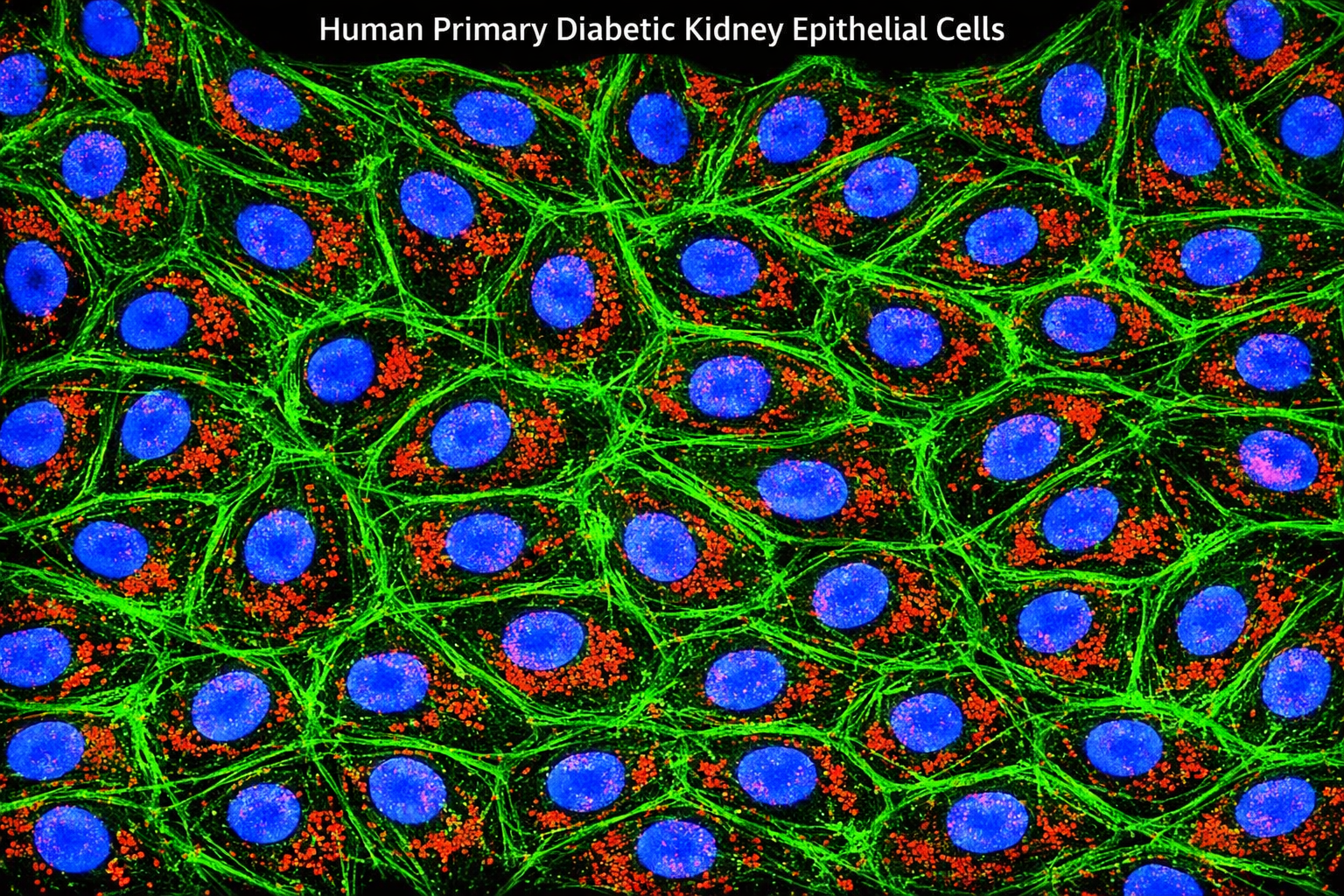
Human Primary Diabetic Bronchial Epithelial Cells

Quick Actions
Product Overview
Description
Human Primary Diabetic Bronchial Epithelial Cells are specialized cells derived from the airway epithelium of individuals with diabetes. These cells can be used in research to study the effects of diabetes on respiratory health, investigating how elevated glucose levels and metabolic changes influence bronchial function and susceptibility to infections or inflammation.
Guarantee expansion for a minimum of 2-5 population
doublings.
IMPORTANT: Quality warranty requires use of NeoBioPharma media. Biohazardous material despite negative pathogen testing. Quality claims must be reported within 1 month.
Key Features
Catalog Number: NBPE002
Product Format: Frozen
Vial Cell Number: > 5x10[5] cells/vial
Passage:1(P1)
Storage: Liquid Nitrogen, Vapor Phase
Intended Use: Research use only (RUO)
Characterization Markers
Positive for endothelial markers: Positive for epithelial cell
markers: E-cadherin and/or ZO-1 by immunofluorescence staining.
- Cells are incubated with EpCAM-1 (CD326) antibody during
isolation using magnetic beads to ensure purity
Quick Facts
Product Type
Human Type II Diabetes Endothelial Cells
Viability
>95% viable (Trypan Blue exclusion)
Applications
Respiratory Infection Susceptibility: Studying wh…
Availability
In Stock • Global Shipping
Technical Specifications
Primary Applications
Applications & Use Cases
Primary Applications
Respiratory Infection Susceptibility: Studying why diabetic patients have higher rates of pneumonia
Suitable for respiratory infection susceptibility: studying why diabetic patients have higher rates of pneumonia studies and research applications
tuberculosis
Suitable for tuberculosis studies and research applications
and COVID-19 complications. Researchers expose these cells to viruses or bacteria to compare infection rates and immune responses against non-diabetic controls. Wound Healing: Investigating why airway healing is impaired in diabetes (often using scratch assays). Asthma and COPD Comorbidities: Exploring why diabetic patients often have more severe outcomes in chronic lung diseases. Drug Transport: Assessing how diabetes changes the absorption of inhaled drugs (insulin
Suitable for and covid-19 complications. researchers expose these cells to viruses or bacteria to compare infection rates and immune responses against non-diabetic controls. wound healing: investigating why airway healing is impaired in diabetes (often using scratch assays). asthma and copd comorbidities: exploring why diabetic patients often have more severe outcomes in chronic lung diseases. drug transport: assessing how diabetes changes the absorption of inhaled drugs (insulin studies and research applications
steroids) across the bronchial barrier.
Suitable for steroids) across the bronchial barrier. studies and research applications
Research Areas
In Vitro Studies
Cell culture and screening applications
Molecular Biology
Gene expression & signaling studies
Drug Discovery
Screening & validation studies
Disease Modeling
Pathophysiology research
Support & Resources
Technical Support
Our experts are available for technical questions and protocol assistance.
Contact Support