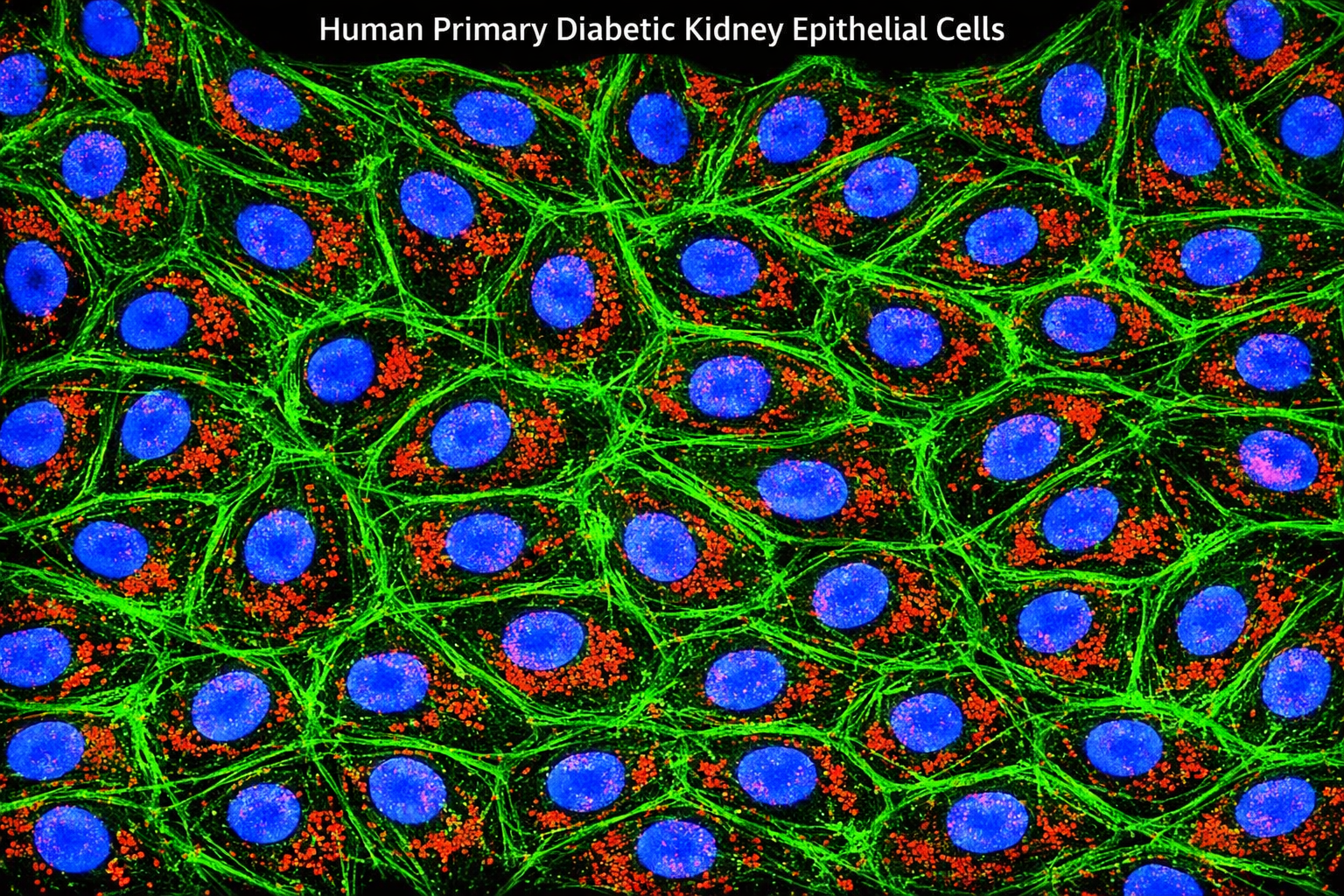
Human Primary Diabetic Gallbladder Epithelial Cells

Quick Actions
Product Overview
Description
Human Primary Diabetic Gallbladder Epithelial Cells are specialized cells that form the inner lining of the gallbladder, an organ critical for bile storage and release. In individuals with diabetes, these epithelial cells can undergo significant changes that may affect their normal functions due to the persistent high blood sugar levels and the body's impaired ability to respond to insulin.
These cells are essential for various processes, such as the secretion and absorption of bile, which aids in digestion and fat emulsification.
Guarantee expansion for a minimum of 2-5 population
doublings.
IMPORTANT: Quality warranty requires use of NeoBioPharma media. Biohazardous material despite negative pathogen testing. Quality claims must be reported within 1 month.
Key Features
Catalog Number: NBPE004
Product Format: Frozen
Vial Cell Number: > 5x10[5] cells/vial
Passage:1(P1)
Storage: Liquid Nitrogen, Vapor Phase
Intended Use: Research use only (RUO)
Characterization Markers
Positive for endothelial markers: Positive for epithelial
markers: E-cadherin and/or ZO-1 (tight junction protein) by
immunofluorescence staining .
- Isolated using EpCAM-1 (CD326) antibody with magnetic beads to ensure epithelial purity
Quick Facts
Product Type
Human Type II Diabetes Endothelial Cells
Viability
>95% viable (Trypan Blue exclusion)
Applications
Diabetic Cholecystopathy: Studying the mechanisms…
Availability
In Stock • Global Shipping
Technical Specifications
Primary Applications
Applications & Use Cases
Primary Applications
Diabetic Cholecystopathy: Studying the mechanisms behind gallbladder distension
Suitable for diabetic cholecystopathy: studying the mechanisms behind gallbladder distension studies and research applications
stasis
Suitable for stasis studies and research applications
and the increased risk of acute acalculous cholecystitis in diabetics. Gallstone Pathogenesis: Investigating how hyperglycemia affects mucin (MUC5AC
Suitable for and the increased risk of acute acalculous cholecystitis in diabetics. gallstone pathogenesis: investigating how hyperglycemia affects mucin (muc5ac studies and research applications
MUC2) overproduction
Suitable for muc2) overproduction studies and research applications
which acts as a nidus for cholesterol crystallization. Fibrosis and Remodeling: Understanding the epithelial-to-mesenchymal transition (EMT) in diabetic patients
Suitable for which acts as a nidus for cholesterol crystallization. fibrosis and remodeling: understanding the epithelial-to-mesenchymal transition (emt) in diabetic patients studies and research applications
which contributes to gallbladder fibrosis and contractile dysfunction. Drug Toxicity: Testing the hepatobiliary toxicity of new anti-diabetic medications (such as SGLT2 inhibitors or GLP-1 agonists) on human-specific epithelial barriers.
Suitable for which contributes to gallbladder fibrosis and contractile dysfunction. drug toxicity: testing the hepatobiliary toxicity of new anti-diabetic medications (such as sglt2 inhibitors or glp-1 agonists) on human-specific epithelial barriers. studies and research applications
Research Areas
In Vitro Studies
Cell culture and screening applications
Molecular Biology
Gene expression & signaling studies
Drug Discovery
Screening & validation studies
Disease Modeling
Pathophysiology research
Support & Resources
Technical Support
Our experts are available for technical questions and protocol assistance.
Contact Support