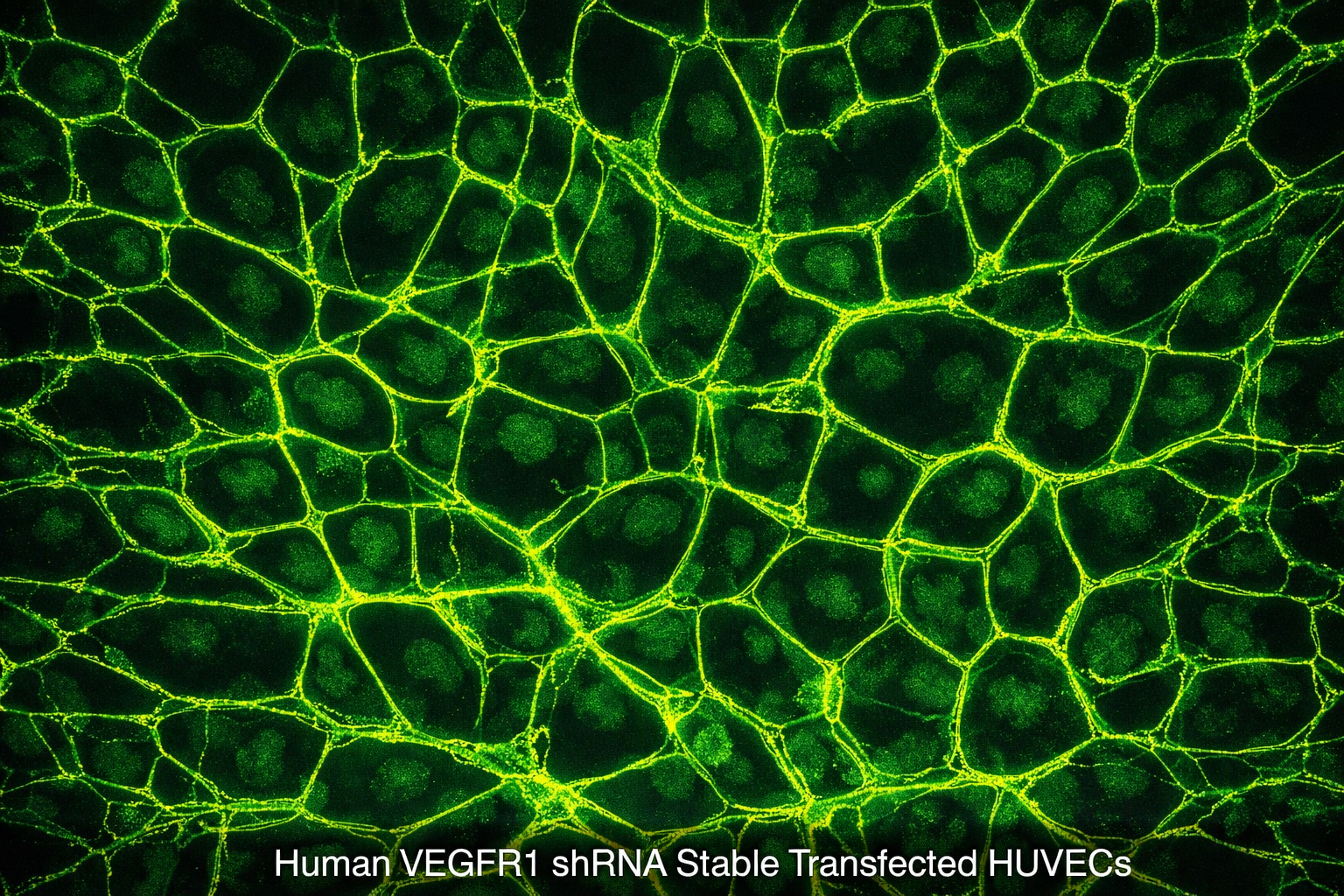
Control shRNA Stable Transfected HUVECs

Quick Actions
Documentation 0 files
Product Overview
Description
Control shRNA stable-transfected Human Umbilical Vein Endothelial cells (HUVECs) are specialized cells obtained from the umbilical veins of humans. These cells have undergone stable transfection with a non-targeting (scramble) short hairpin RNA (shRNA) construct, which does not target any specific gene. As a crucial component of gene-silencing experiments, these control cells are utilized to establish a baseline for comparison, allowing researchers to accurately identify the effects of specific gene knockdown.
By using these control cells, scientists can effectively distinguish between the targeted effects of altering specific genes and any nonspecific effects that may arise from the overall process, including the expression of shRNA, the transfection methods employed, antibiotic selection for cell maintenance, or potential impacts from viral transduction. This clear differentiation is vital for validating experimental results and ensuring the reliability of conclusions drawn in cellular and molecular biology studies.
Guarantee expansion for a minimum of 2-5 population
doublings.
IMPORTANT: Quality warranty requires use of NeoBioPharma media. Biohazardous material despite negative pathogen testing. Quality claims must be reported within 1 month.
Key Features
Catalog Number: NBP-0001-siRNA-Con
Product Format: Frozen
Vial Cell Number: > 5x10[5] cells/vial
Passage:1(P1)
Storage: Liquid Nitrogen, Vapor Phase
Intended Use: Research use only (RUO)
CELL CHARACTERISTICS
-Cell Type: Primary Human Vascular Endothelial cells from the umbilical vein.
-Stable shRNA Expression: Integrated non-targeting shRNA construct maintained through antibiotic selection.
-Endothelial Morphology: Typical cobblestone-like monolayer appearance when confluent.
-Endothelial Markers: Express endothelial markers such as CD31 (PECAM-1), VE-cadherin (CD144), von Willebrand factor (vWF), and eNOS.
-Angiogenic Activity: Retain the ability to migrate, proliferate, and form capillary-like structures in angiogenesis assays.
-Normal Endothelial Function: Maintain barrier integrity, cell-cell junctions, and responsiveness to inflammatory and angiogenic stimuli.
-Experimental Control: Provides a baseline for comparison with gene-specific shRNA knockdown HUVEC lines.
Quick Facts
Product Type
Human Endothelial cells
Viability
>95% viable (Trypan Blue exclusion)
Applications
Gene Silencing Studies Negative control for shRN…
Availability
In Stock • Global Shipping
Technical Specifications
Primary Applications
Applications & Use Cases
Primary Applications
Gene Silencing Studies Negative control for shRNA-mediated knockdown experiments. Validation of target-specific phenotypic changes. -Angiogenesis Research Endothelial tube formation assays. Sprouting and vascular network formation studies. Investigation of pro- and anti-angiogenic factors. -Vascular Biology Endothelial barrier function analysis. Cell adhesion and permeability studies. Mechanistic studies of vascular development and remodeling. -Inflammation Research Leukocyte-endothelial interaction assays. Cytokine and chemokine response studies. Evaluation of inflammatory signaling pathways. -Drug Discovery and Toxicology Screening of compounds affecting endothelial function. Assessment of vascular toxicity and safety. Comparison with target-gene knockdown endothelial models. -Cancer Research Tumor angiogenesis investigations. Evaluation of anti-vascular and anti-angiogenic therapeutics. Analysis of endothelial-tumor cell interactions.
Suitable for gene silencing studies negative control for shrna-mediated knockdown experiments. validation of target-specific phenotypic changes. -angiogenesis research endothelial tube formation assays. sprouting and vascular network formation studies. investigation of pro- and anti-angiogenic factors. -vascular biology endothelial barrier function analysis. cell adhesion and permeability studies. mechanistic studies of vascular development and remodeling. -inflammation research leukocyte-endothelial interaction assays. cytokine and chemokine response studies. evaluation of inflammatory signaling pathways. -drug discovery and toxicology screening of compounds affecting endothelial function. assessment of vascular toxicity and safety. comparison with target-gene knockdown endothelial models. -cancer research tumor angiogenesis investigations. evaluation of anti-vascular and anti-angiogenic therapeutics. analysis of endothelial-tumor cell interactions. studies and research applications
Research Areas
In Vitro Studies
Cell culture and screening applications
Molecular Biology
Gene expression & signaling studies
Drug Discovery
Screening & validation studies
Disease Modeling
Pathophysiology research
Support & Resources
Technical Support
Our experts are available for technical questions and protocol assistance.
Contact SupportDocumentation & Resources
No Documentation Available
Documentation for this product is not yet available.
Request Documentation