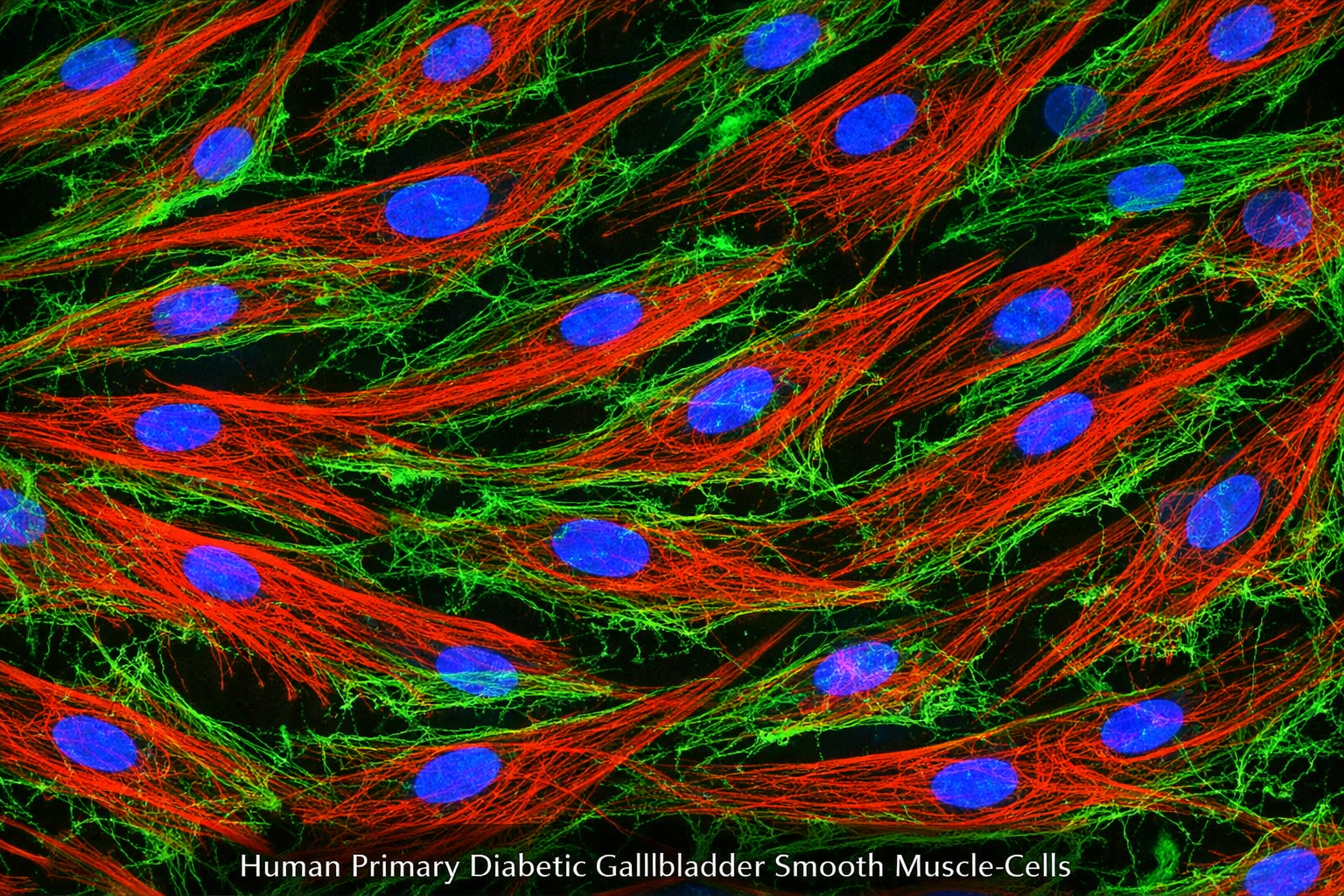
Human Primary Diabetic Liver Artery Smooth Muscle Cells

Quick Actions
Product Overview
Description
Human Primary Diabetic Liver Artery Smooth Muscle Cells are cryopreserved primary smooth-muscle cells for in vitro research. The product supports tissue-relevant mechanistic studies, disease modeling, assay development, pharmacology, and cell-biology applications. Early-passage use and standardized culture conditions are recommended to minimize phenotype drift.
Guarantee expansion for a minimum of 2-6 population
doublings.
IMPORTANT: Quality warranty requires use of NeoBioPharma media. Biohazardous material despite negative pathogen testing. Quality claims must be reported within 1 month.
Key Features
Catalog Number: NBPDS007
Product Format: Frozen
Vial Cell Number: > 5x10[5] cells/vial
Passage:1(P1)
Storage: Liquid Nitrogen, Vapor Phase
Intended Use: Research use only (RUO)
Characterization Markers
Characterized by positive expression of smooth muscle cell-specific alpha-actin.
Quick Facts
Product Type
Human Type II Diabetes Endothelial Cells
Viability
>95% viable (Trypan Blue exclusion)
Applications
-Glucose Toxicity Studies: Testing how high gluco…
Availability
In Stock • Global Shipping
Technical Specifications
Primary Applications
Applications & Use Cases
Primary Applications
-Glucose Toxicity Studies: Testing how high glucose concentrations affect cell function and gene expression. -Insulin Resistance Assays: Investigating why the smooth muscle cells in diabetic patients no longer respond properly to insulin's vasodilatory effects. -Drug Screening: Testing new anti-diabetic drugs to see if they have protective effects on the vasculature of the liver. -Mechanobiology: Studying how the stiffness of the diabetic environment alters cell signaling.
Suitable for -glucose toxicity studies: testing how high glucose concentrations affect cell function and gene expression. -insulin resistance assays: investigating why the smooth muscle cells in diabetic patients no longer respond properly to insulin's vasodilatory effects. -drug screening: testing new anti-diabetic drugs to see if they have protective effects on the vasculature of the liver. -mechanobiology: studying how the stiffness of the diabetic environment alters cell signaling. studies and research applications
Research Areas
In Vitro Studies
Cell culture and screening applications
Molecular Biology
Gene expression & signaling studies
Drug Discovery
Screening & validation studies
Disease Modeling
Pathophysiology research
Support & Resources
Technical Support
Our experts are available for technical questions and protocol assistance.
Contact Support