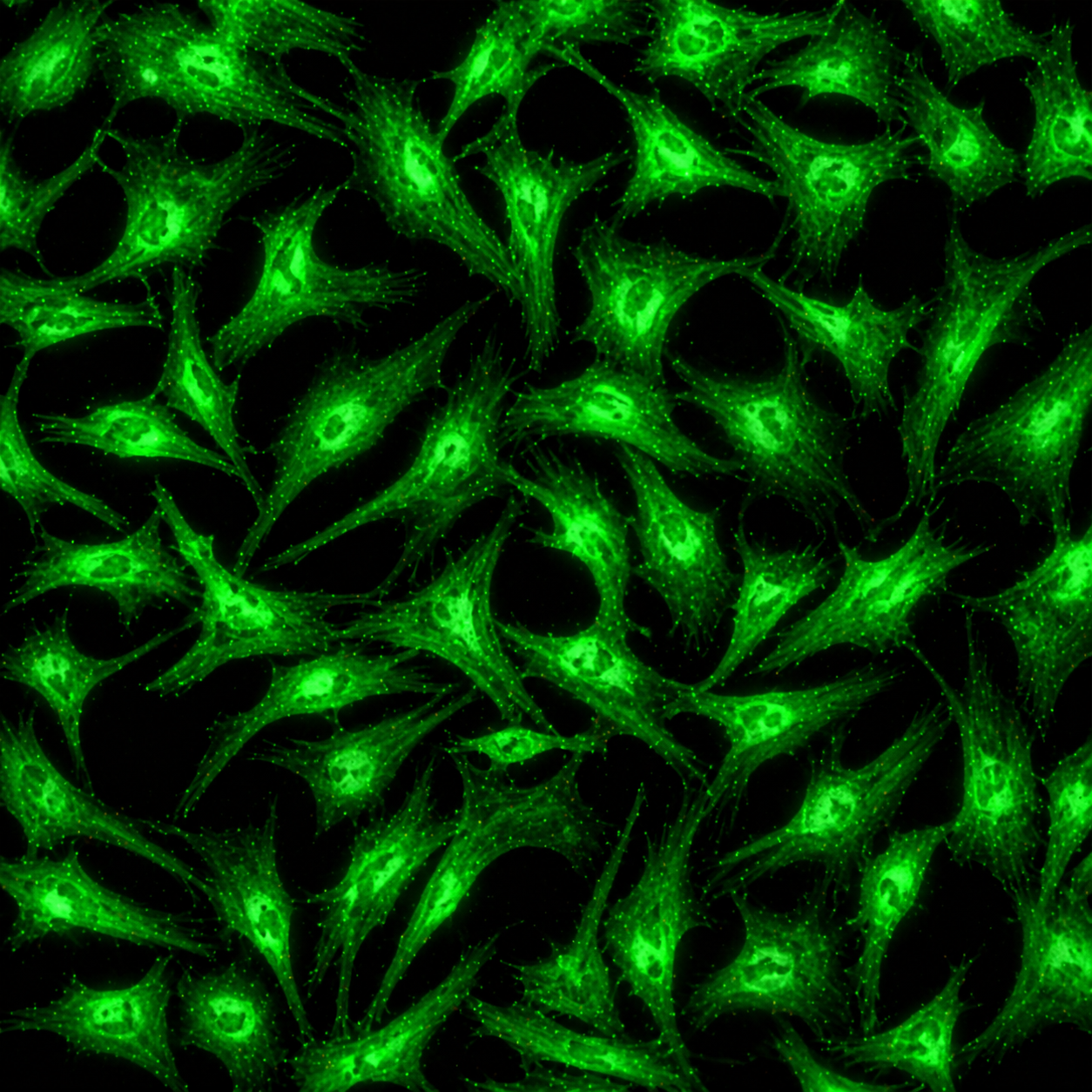
Human Aortic Artery Endothelial Cells

Quick Actions
Documentation 0 files
Product Overview
Description
Human Aortic Artery Endothelial Cells (HAECs) are primary cells that line the inner luminal surface of the aorta, the largest artery in the human body. These cells form a continuous monolayer known as the vascular endothelium, which serves as a critical interface between circulating blood and the underlying vascular tissue. HAECs are isolated from both the ascending (thoracic) and descending (abdominal) aorta and are widely used as a physiologically relevant in vitro model for cardiovascular research.
Guarantee expansion for a minimum of 2-5 population
doublings.
IMPORTANT: Quality warranty requires use of NeoBioPharma media. Biohazardous material despite negative pathogen testing. Quality claims must be reported within 1 month.
Key Features
Catalog Number: NBP-0006
Product Format: Frozen
Vial Cell Number: > 5x10[5] cells/vial
Passage:1(P1)
Storage: Liquid Nitrogen, Vapor Phase
Intended Use: Research use only (RUO)
CELL CHARACTERISTICS
* CD31 (PECAM-1)
* Von Willebrand Factor (vWF) / Factor VIII-related antigen
* VE-Cadherin
* Positive uptake of acetylated LDL (DiI-Ac-LDL
Quick Facts
Product Type
Human Endothelial cells
Viability
>98% viable (Trypan Blue exclusion)
Applications
HAECs are among the most appropriate cell types f…
Availability
In Stock • Global Shipping
Technical Specifications
Primary Applications
Applications & Use Cases
Primary Applications
HAECs are among the most appropriate cell types for in vitro modeling of the arterial endothelium
Suitable for haecs are among the most appropriate cell types for in vitro modeling of the arterial endothelium studies and research applications
particularly in atherosclerosis research. They are preferred over other endothelial cell models because they are of human arterial (not venous) origin
Suitable for particularly in atherosclerosis research. they are preferred over other endothelial cell models because they are of human arterial (not venous) origin studies and research applications
unlike human umbilical vein endothelial cells (HUVECs)
Suitable for unlike human umbilical vein endothelial cells (huvecs) studies and research applications
and are more accessible than coronary artery endothelial cells. HAECs have been used extensively to study: * Atherosclerosis and cardiovascular disease * Diabetes-associated vascular complications * Endothelial dysfunction caused by oxidative stress
Suitable for and are more accessible than coronary artery endothelial cells. haecs have been used extensively to study: * atherosclerosis and cardiovascular disease * diabetes-associated vascular complications * endothelial dysfunction caused by oxidative stress studies and research applications
air pollution
Suitable for air pollution studies and research applications
and inflammation * Immune response and graft rejection mechanisms * Stent-graft compatibility and vascular implant development * 3D endothelialized engineered tissue models * Drug screening and vascular wound healing
Suitable for and inflammation * immune response and graft rejection mechanisms * stent-graft compatibility and vascular implant development * 3d endothelialized engineered tissue models * drug screening and vascular wound healing studies and research applications
Research Areas
In Vitro Studies
Cell culture and screening applications
Molecular Biology
Gene expression & signaling studies
Drug Discovery
Screening & validation studies
Disease Modeling
Pathophysiology research
Support & Resources
Technical Support
Our experts are available for technical questions and protocol assistance.
Contact Support