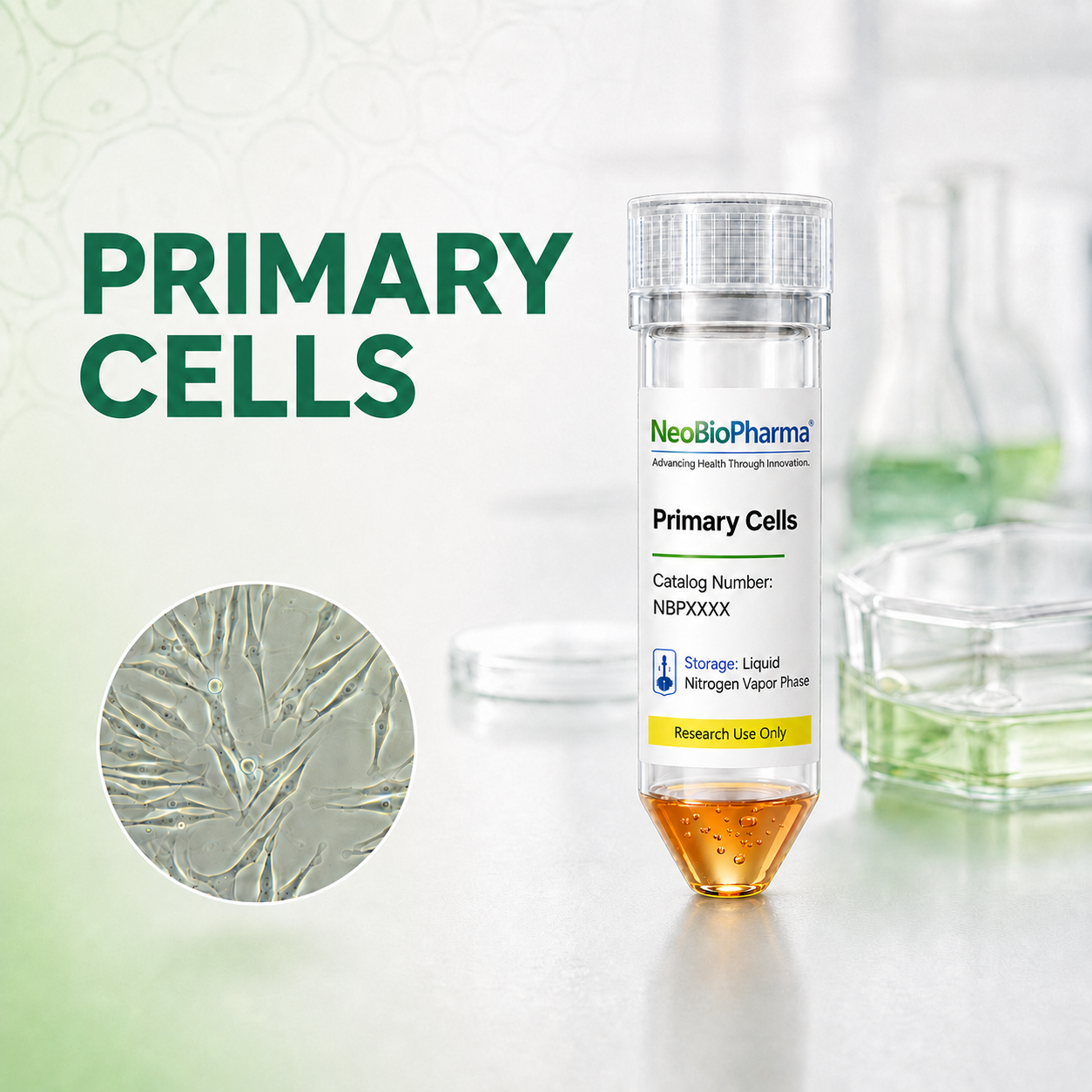
GFP-hTert Immortalized Human Retinal Microvascular Pericytes

Quick Actions
Product Overview
Description
GFP-hTERT Immortalized Human Retinal Microvascular Pericytes are a specialized, genetically engineered cell line derived from primary human retinal microvascular pericytes. These cells have been stably transduced with two key constructs: the human telomerase reverse transcriptase (hTERT) gene, which confers cellular immortalization, and a green fluorescent protein (GFP) reporter, which enables real-time fluorescent visualization and cell tracking.
The resulting cell line provides a consistent, renewable, and readily identifiable human-specific model for in vitro retinal vascular research.
IMPORTANT: Quality warranty requires use of NeoBioPharma media. Biohazardous material despite negative pathogen testing. Quality claims must be reported within 1 month.
Key Features
Catalog Number: NBP0025-IChTert-GFP
Product Format: Frozen
Vial Cell Number: > 5x10[5] cells/vial
Passage:1(P1)
Storage: Liquid Nitrogen, Vapor Phase
Intended Use: Research use only (RUO)
CELLS CHARACTERIZATION
Positive markers:
* NG2 (Neural/Glial Antigen 2): A membrane-bound chondroitin sulfate proteoglycan expressed by pericytes; upon activation, NG2 signaling facilitates pericyte proliferation and recruitment to newly formed vessels.
* PDGFR (Platelet-Derived Growth Factor Receptor Beta): A widely expressed pericyte surface receptor critical for pericyte recruitment and survival; PDGF-B/PDGFR signaling is essential for the formation and maturation of the blood-retinal barrier through active recruitment of pericytes onto growing retinal vessels.
* -SMA (Alpha-Smooth Muscle Actin): A contractile cytoskeletal protein expressed by pericytes, reflecting their smooth muscle-like contractile phenotype.
* Desmin: An intermediate filament protein expressed by both immature and mature pericytes.
* CD146: A cell surface adhesion molecule associated with pericyte identity.
Negative markers:
* CD31 (PECAM-1): Absent, confirming non-endothelial identity.
* vWF (von Willebrand Factor): Absent, further excluding endothelial contamination.
Quick Facts
Product Type
Immortalized Cells
Viability
>85% viable (Trypan Blue exclusion)
Applications
1. Diabetic Retinopathy (DR) Research: Modeling p…
Availability
In Stock • Global Shipping
Technical Specifications
Primary Applications
Applications & Use Cases
Primary Applications
1. Diabetic Retinopathy (DR) Research: Modeling pericyte dropout
Suitable for 1. diabetic retinopathy (dr) research: modeling pericyte dropout studies and research applications
barrier dysfunction
Suitable for barrier dysfunction studies and research applications
and the cellular responses to hyperglycemic and hypoxic conditions in vitro. In early stages of DR
Suitable for and the cellular responses to hyperglycemic and hypoxic conditions in vitro. in early stages of dr studies and research applications
a series of microvascular injuries including basement membrane thickening
Suitable for a series of microvascular injuries including basement membrane thickening studies and research applications
pericyte dropout
Suitable for pericyte dropout studies and research applications
low-grade inflammation
Suitable for low-grade inflammation studies and research applications
and disruption of tight junctions causes regression of retinal capillaries
Suitable for and disruption of tight junctions causes regression of retinal capillaries studies and research applications
hypoxia
Suitable for hypoxia studies and research applications
excessive vascular permeability
Suitable for excessive vascular permeability studies and research applications
and neovascularization. 2. Blood-Retinal Barrier (BRB) Modeling: Used in co-culture systems alongside retinal endothelial cells and astrocytes to reconstitute the inner BRB in vitro. The GFP label allows clear discrimination of pericytes from endothelial cells in these complex multi-cell models. 3. Angiogenesis Studies: Investigating the role of pericytes in sprouting angiogenesis
Suitable for and neovascularization. 2. blood-retinal barrier (brb) modeling: used in co-culture systems alongside retinal endothelial cells and astrocytes to reconstitute the inner brb in vitro. the gfp label allows clear discrimination of pericytes from endothelial cells in these complex multi-cell models. 3. angiogenesis studies: investigating the role of pericytes in sprouting angiogenesis studies and research applications
vessel maturation
Suitable for vessel maturation studies and research applications
and pathological neovascularization
Suitable for and pathological neovascularization studies and research applications
including the PDGF-B/PDGFR signaling axis. 4. Drug Screening and Therapeutic Development: Serving as a reproducible human cell-based platform for testing novel pharmacological agents targeting pericyte biology
Suitable for including the pdgf-b/pdgfr signaling axis. 4. drug screening and therapeutic development: serving as a reproducible human cell-based platform for testing novel pharmacological agents targeting pericyte biology studies and research applications
vascular permeability
Suitable for vascular permeability studies and research applications
or retinal disease. 5. Cell Tracking and Co-culture Experiments: The constitutive GFP expression facilitates real-time monitoring of pericyte behavior
Suitable for or retinal disease. 5. cell tracking and co-culture experiments: the constitutive gfp expression facilitates real-time monitoring of pericyte behavior studies and research applications
migration
Suitable for migration studies and research applications
and interaction with endothelial cells or other retinal cell types.
Suitable for and interaction with endothelial cells or other retinal cell types. studies and research applications
Research Areas
In Vitro Studies
Cell culture and screening applications
Molecular Biology
Gene expression & signaling studies
Drug Discovery
Screening & validation studies
Disease Modeling
Pathophysiology research
Support & Resources
Technical Support
Our experts are available for technical questions and protocol assistance.
Contact Support