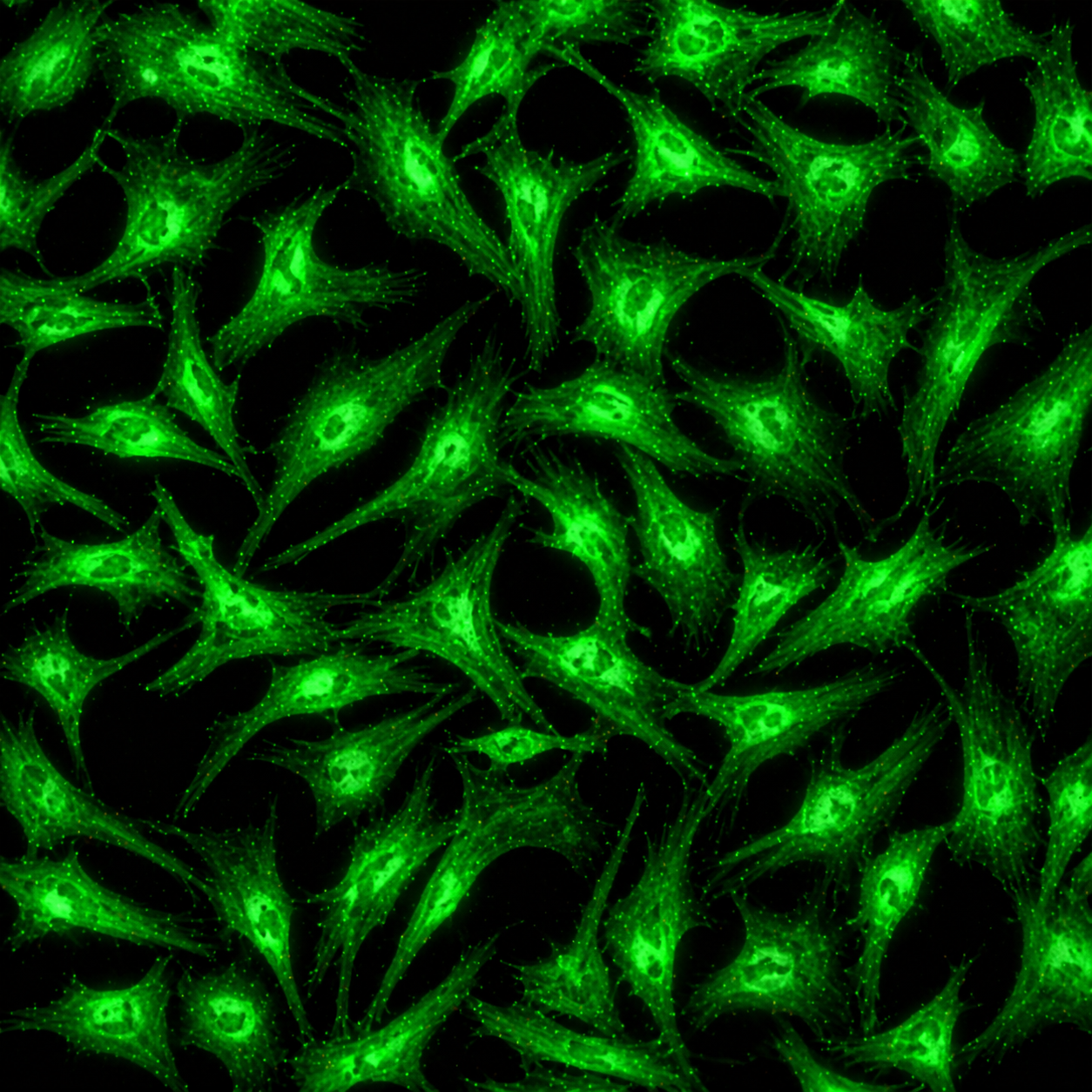
Human Cord Blood CD34+ Cells Derived Endothelial Cells

Quick Actions
Documentation 0 files
Product Overview
Description
Human Cord Blood CD34+ cells represent a distinct group of hematopoietic stem and progenitor cells that can be isolated from umbilical cord blood.
These cells are characterized by the expression of the CD34 surface marker, which is commonly associated with stemness and the ability to differentiate into various blood cell lineages. When placed in specialized culture conditions that promote their growth and differentiation, CD34+ cells can transform into endothelial cells.
Endothelial cells are vital for the formation of blood vessels as they line the interior surfaces, playing critical roles in vascular biology, including barrier function, blood flow regulation, and the inflammatory response.
IMPORTANT: Quality warranty requires use of NeoBioPharma media. Biohazardous material despite negative pathogen testing. Quality claims must be reported within 1 month.
Key Features
Catalog Number: NBP-0024
Product Format: Frozen
Vial Cell Number: > 5x10[5] cells/vial
Passage:1(P1)
Storage: Liquid Nitrogen, Vapor Phase
Intended Use: Research use only (RUO)
CELLS CHARACTERIZATION
-Express typical endothelial markers (e.g., CD31, VE-cadherin, vWF).
-Exhibit cobblestone morphology in culture.
-Capable of forming tube-like structures in vitro (angiogenesis assays).
-Demonstrate uptake of acetylated LDL
Show functional properties such as nitric oxide production.
-Retain low immunogenicity compared to adult endothelial cells.
Quick Facts
Product Type
Human Endothelial cells
Viability
>98% viable (Trypan Blue exclusion)
Applications
-Vascular regeneration and tissue engineering: Us…
Availability
In Stock • Global Shipping
Technical Specifications
Primary Applications
Applications & Use Cases
Primary Applications
-Vascular regeneration and tissue engineering: Used to promote neovascularization in engineered tissues and grafts. -Cell-based therapies: Potential for treating ischemic diseases (e.g.
Suitable for -vascular regeneration and tissue engineering: used to promote neovascularization in engineered tissues and grafts. -cell-based therapies: potential for treating ischemic diseases (e.g. studies and research applications
myocardial infarction
Suitable for myocardial infarction studies and research applications
peripheral artery disease). -Disease modeling: Useful for studying vascular diseases
Suitable for peripheral artery disease). -disease modeling: useful for studying vascular diseases studies and research applications
angiogenesis
Suitable for angiogenesis studies and research applications
and endothelial dysfunction. -Drug screening and toxicity testing: Serve as a platform for evaluating vascular responses to new compounds. -Research on endothelial biology and development: Help elucidate mechanisms of blood vessel formation and repair.
Suitable for and endothelial dysfunction. -drug screening and toxicity testing: serve as a platform for evaluating vascular responses to new compounds. -research on endothelial biology and development: help elucidate mechanisms of blood vessel formation and repair. studies and research applications
Research Areas
In Vitro Studies
Cell culture and screening applications
Molecular Biology
Gene expression & signaling studies
Drug Discovery
Screening & validation studies
Disease Modeling
Pathophysiology research
Support & Resources
Technical Support
Our experts are available for technical questions and protocol assistance.
Contact Support